

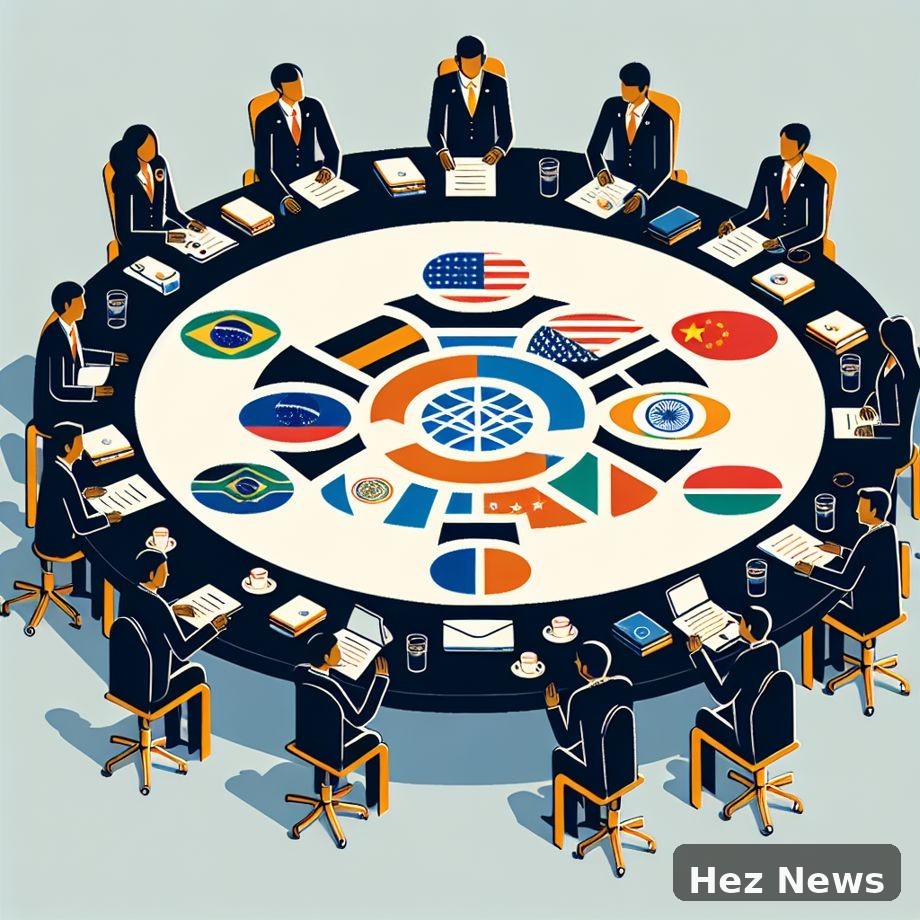
The financial landscape is rapidly changing as the BRICS nations—Brazil, Russia, India, China, and South Africa—have united to demand significant reforms in global financial institutions, particularly the International Monetary Fund (IMF) and the World Bank. This call for reform comes at a time when these emerging markets are increasingly vital to the global economy, highlighting the need for their voices to be amplified on the world stage.
Importance of BRICS in the Global Economy
As Nigeria looks to strengthen its economic ties with other emerging markets, the BRICS nations represent a crucial alliance. With their collective share in global output on the rise, there is a growing consensus that the traditional financial institutions must adapt to reflect the shifting dynamics of the global economy. The BRICS finance ministers have emphasized that current governance structures within the IMF and World Bank do not adequately represent the interests of these nations.
Calls for Reform
The finance ministers of BRICS have articulated a vision for a more equitable global financial system that empowers emerging economies. Their proposal includes a stronger voice in decision-making processes and a reassessment of the voting power held by member states within these institutions. This is particularly relevant for Nigeria, which has been vocal about the need for reforms that reflect the realities of its economic contributions and challenges.
Health Crises and Economic Implications
In addition to financial reforms, the BRICS nations are also facing significant health crises that have profound implications for their economies. The COVID-19 pandemic has underscored the vulnerabilities in public health systems, particularly in nations like Nigeria where healthcare infrastructure is still developing. As BRICS leaders discuss economic recovery, the interconnection between health and economic stability has become increasingly clear.
Nigeria's Role in BRICS
Nigeria's participation in BRICS is vital. As Africa's largest economy, the country stands to benefit from the collective bargaining power of the group. The Nigerian government has been urged to leverage its position to advocate for reforms that would not only benefit Nigeria but also other African nations. With a population exceeding 200 million, Nigeria represents a significant market that BRICS countries may want to tap into.
Conclusion
The call for reform by BRICS finance ministers is not just a demand for change; it is a reflection of the evolving global landscape where emerging markets are asserting their influence. For Nigeria, this represents an opportunity to reshape its economic future and engage more effectively with international financial systems. As these discussions unfold, it will be crucial for Nigerian stakeholders to remain engaged and advocate for policies that reflect the country's unique needs and challenges.




Leave a Comment