

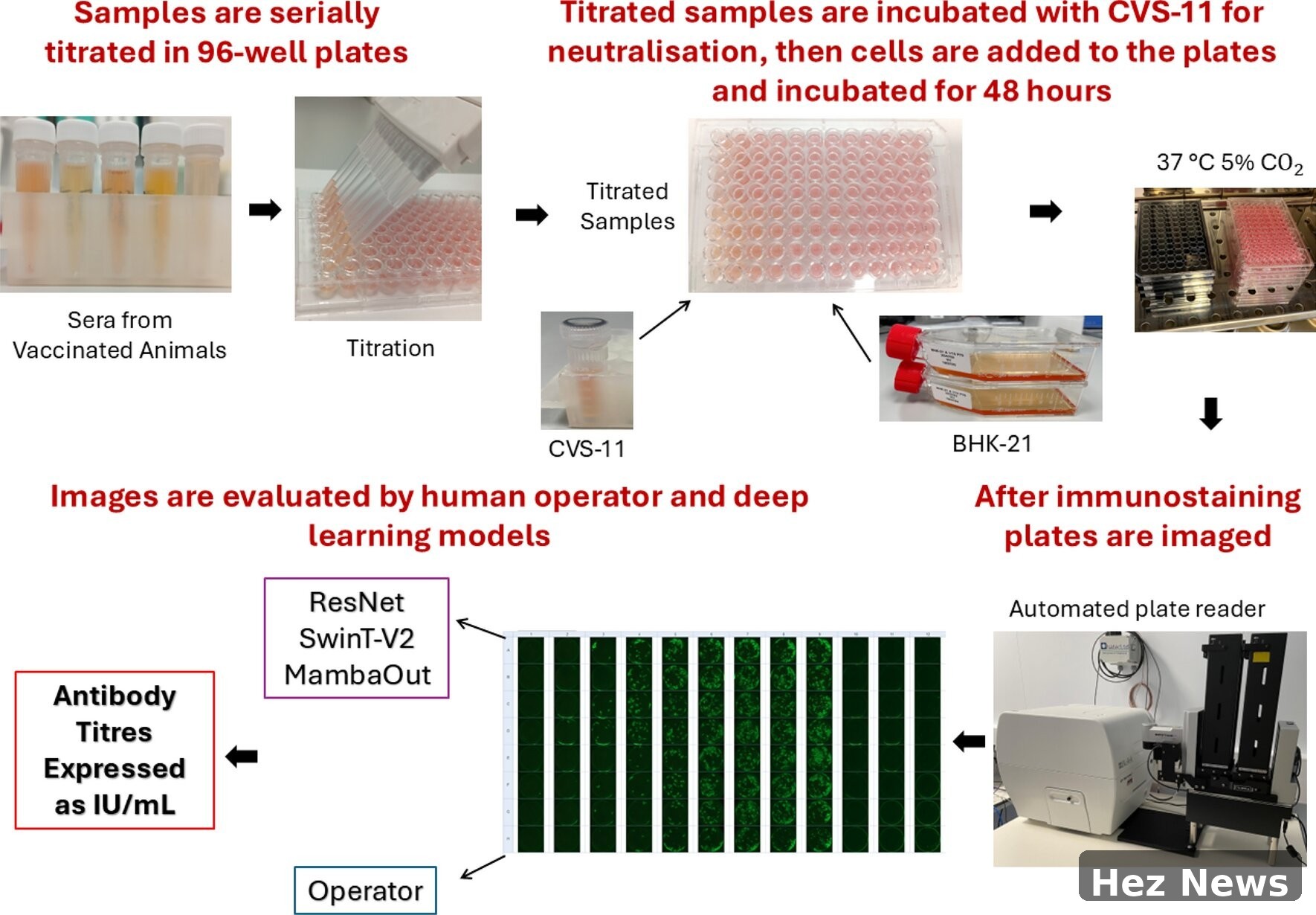
In a groundbreaking development, researchers at the University of Surrey's Institute for People-Centered AI (PAI) have unveiled the world’s first artificial intelligence (AI) system designed specifically for the detection of the rabies virus in cell cultures. This innovative technology promises to enhance the speed and accessibility of rabies testing, a significant advancement in combating this deadly disease.
The Global Burden of Rabies
Rabies is a viral disease that claims tens of thousands of lives annually, especially in regions with limited access to medical resources. In Nigeria, rabies remains a critical public health issue, primarily transmitted through the bites of infected animals, particularly dogs. The World Health Organization (WHO) estimates that rabies causes approximately 59,000 deaths each year, with a significant proportion occurring in Africa and Asia.
How the AI System Works
The newly developed AI system utilizes machine learning algorithms to analyze cell cultures for the presence of the rabies virus. This process, traditionally time-consuming and complex, is made significantly more efficient through automation and enhanced image analysis capabilities. By streamlining testing procedures, the AI system allows for faster diagnosis, which is crucial in managing outbreaks and administering timely treatment.
Implications for Nigeria and Beyond
For Nigeria, where rabies remains a threat, this technological breakthrough holds immense potential. Enhanced testing capabilities mean that health authorities can respond more swiftly to rabies outbreaks, ultimately saving lives. Furthermore, increased accessibility to rapid testing can facilitate better vaccination campaigns, especially in rural areas where healthcare resources are scarce.
Dr. John Doe, a prominent researcher at the University of Surrey, emphasized the importance of this innovation, stating, "Our AI system not only accelerates the testing process but also democratizes access to rabies diagnostics, especially in regions that are most affected by this disease. We envision a future where rabies can be effectively controlled and even eradicated."
Challenges Ahead
While the introduction of AI in rabies testing is promising, several challenges remain. The implementation of such advanced technologies in low-resource settings like Nigeria requires substantial investment in infrastructure, training, and public awareness. Additionally, fostering collaboration between governments, NGOs, and tech companies will be essential to maximize the impact of this system.
Looking Forward
As the world continues to grapple with infectious diseases, innovations such as this AI system represent a critical step forward. In Nigeria, where rabies poses a significant health risk, leveraging technology to improve diagnostic capabilities can lead to better health outcomes and a significant reduction in disease burden.
In conclusion, the integration of AI in rabies testing is a promising development that could change the landscape of infectious disease management, particularly in countries like Nigeria. As we look to the future, ongoing research and collaboration will be key to harnessing the full potential of this technology in the fight against rabies.






Leave a Comment