

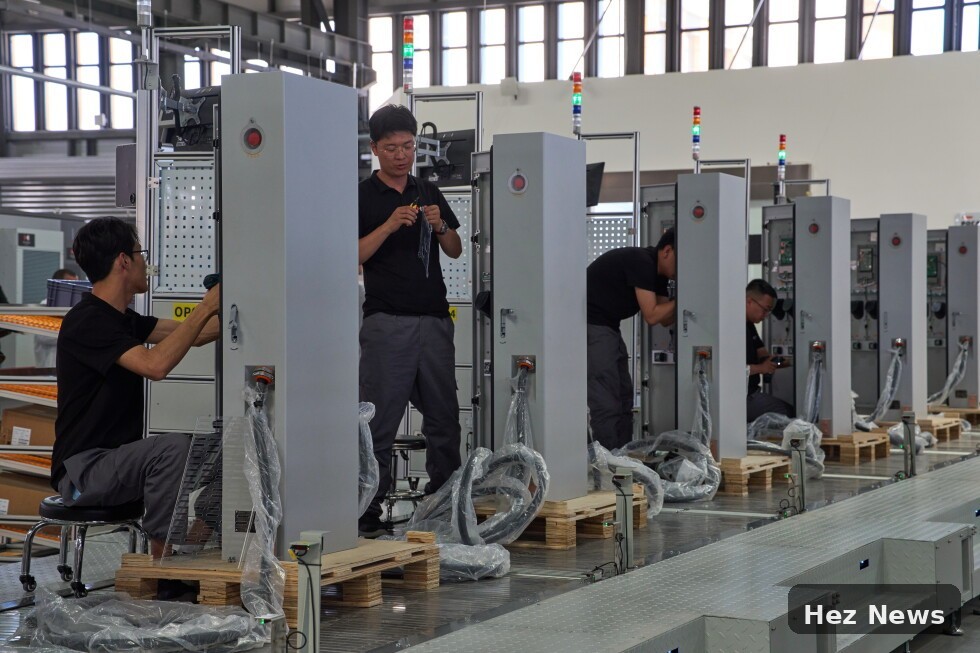
HONG KONG (AP) — China has officially responded to allegations regarding its industrial overcapacity, addressing concerns just as a significant U.S. investigation into this matter is expected to conclude. This probe could lead to the imposition of additional tariffs on Chinese goods, adding pressure to an already strained trade relationship between the two global powers.
In recent statements, Chinese officials have defended the country's manufacturing capabilities, asserting that the claims of overcapacity are exaggerated. They argue that China's industrial growth has been instrumental not only for its economy but also for global supply chains, including those that serve Nigerian markets.
Understanding China's Industrial Landscape
China's economy has seen rapid expansion over the past few decades, establishing itself as a powerhouse in various sectors, including technology, textiles, and machinery. This growth has led to fears, particularly from the U.S., that the country is producing more goods than it can consume, resulting in a surplus that could destabilize international markets.
For Nigeria, which relies heavily on imports, including electronics and machinery from China, the implications of these tariffs could be significant. Increases in tariffs may lead to higher prices for imported Chinese goods, affecting local businesses and consumers alike.
The U.S. Investigation and Potential Tariffs
The U.S. investigation into China's industrial capacity is part of a broader strategy to address perceived unfair trade practices. With the release of the probe's findings imminent, there is rising concern among stakeholders in Nigeria about how these developments will affect trade dynamics.
American officials have suggested that imposing tariffs could help protect domestic industries from what they see as unfair competition from Chinese manufacturers. However, this stance has drawn criticism from various quarters, including Nigerian trade experts, who worry that such measures could inadvertently harm their economy.
Nigeria's Trade Relations with China
China and Nigeria share a robust trade relationship, with China being one of Nigeria's largest trading partners. In 2022 alone, bilateral trade between the two nations reached significant heights, emphasizing the importance of maintaining a stable trading environment.
In light of the U.S. scrutiny on China's industrial practices, Nigerian businesses may need to reassess their supply chains and sourcing strategies. As tariffs could lead to increased costs, some Nigerian companies may explore alternative suppliers or adjust their pricing strategies to remain competitive.
Looking Ahead
As the global economic landscape evolves, the responses of both China and the U.S. to these industrial capacity criticisms will be closely monitored. For Nigeria, understanding these dynamics is crucial, as they will directly impact trade practices, market prices, and ultimately, economic growth.
While China continues to defend its position, the outcome of the U.S. investigation could reshape the future of international trade, with Nigeria standing at a crossroads in this unfolding narrative.





Leave a Comment