

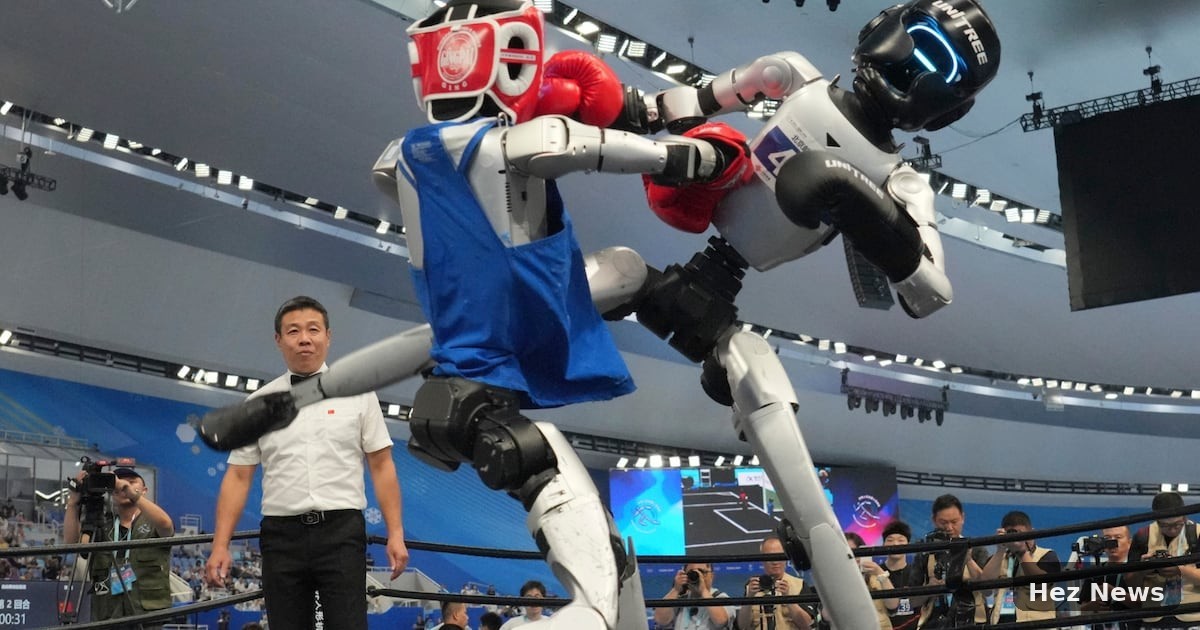
Beijing - The World Humanoid Robot Games concluded in Beijing with a remarkable display of technological advancement as a Chinese-built humanoid robot sprinted 100 meters in just 8.64 seconds, surpassing Usain Bolt's world record by nearly a second. This impressive feat not only highlights China's growing capabilities in robotics but also opens a dialogue about the future of technology in sports and beyond.
The Rise of Humanoid Robotics in China
China has been at the forefront of technological innovation, particularly in the field of robotics. The recent achievements at the World Humanoid Robot Games showcase the country's investment in research and development, aiming to position itself as a global leader in robotics and artificial intelligence. With state-of-the-art facilities and funding, China is rapidly advancing its capabilities in creating humanoid robots that can perform tasks previously thought to be exclusive to humans.
The Competition
The Beijing competition attracted teams from across the globe, all eager to demonstrate their innovations. The standout performance by the Chinese robot not only drew attention for its speed but also for its technical precision. After completing the sprint, the robot, unfortunately, collided with a padded wall, which sparked discussions about the limitations and challenges facing robotics in real-world applications.
Nigeria's Perspective
As Nigeria continues to explore technological advancements, the success of humanoid robotics in China serves as an inspiration for local engineers and innovators. With a burgeoning tech ecosystem, Nigeria is gradually shifting its focus towards robotics and artificial intelligence, which have the potential to revolutionize various sectors including healthcare, agriculture, and education.
Several Nigerian universities and tech hubs are beginning to invest in robotics programs, reflecting a growing recognition of the importance of technology in addressing local challenges. The achievements in China could motivate Nigerian innovators to push boundaries and explore the possibilities of integrating robotics into everyday life.
The Future of Robotics
The implications of such advancements in humanoid robotics are vast. As robots become faster and more efficient, industries across the globe may find new ways to enhance productivity. However, it also raises critical questions about the future of work, ethics in AI, and the societal impact of replacing human roles with machines.
As we witness these developments, it is essential for nations, including Nigeria, to prioritize ethical standards and workforce training to ensure that advancements in robotics benefit society as a whole.
Conclusion
China's recent success at the World Humanoid Robot Games is not just a milestone for the nation, but a signal of the rapid advancements in robotics that could shape the future. As Nigeria looks to harness technology for its growth, the lessons learned from such international competitions will be invaluable in navigating the path forward.






Leave a Comment