

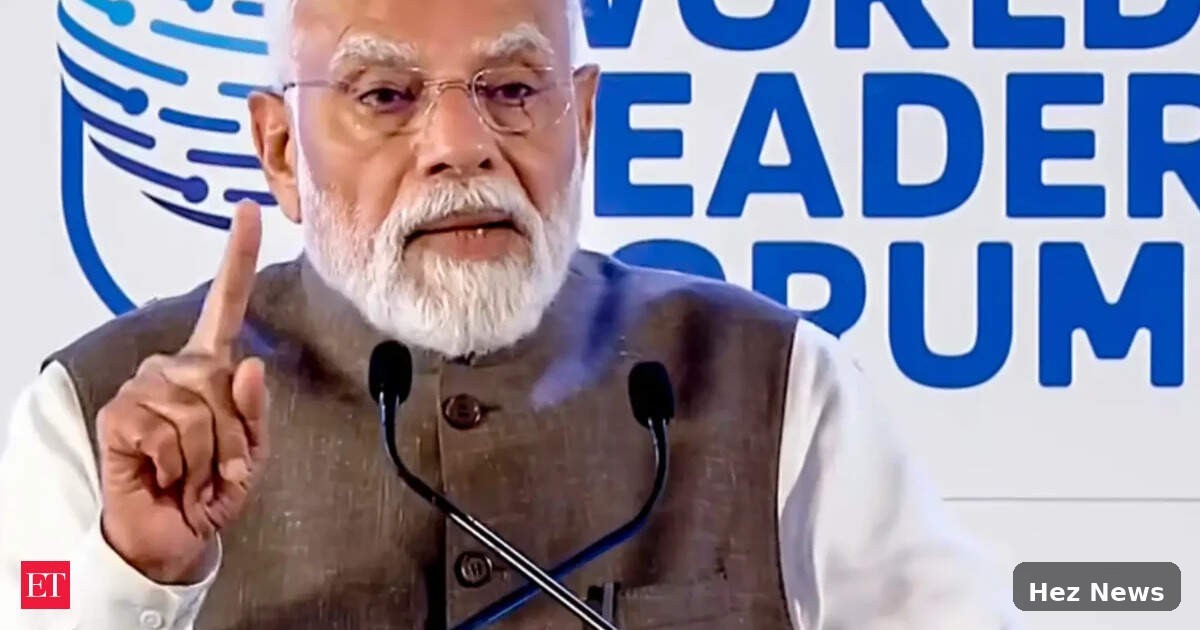
During the recent ET World Leaders Forum, Indian Prime Minister Narendra Modi emphasized the remarkable transformation of India's middle class through trust-based governance and significant reforms. He articulated how these changes have created opportunities that remain elusive in many other countries, including Nigeria.
Transformative Reforms in India
Modi pointed out that the Indian government has moved from a punitive approach to one that encourages growth through incentives. This shift has been pivotal in enhancing the socioeconomic status of millions of families.
The Middle Class Dream
The Prime Minister noted that the aspirations of India's middle class are now becoming a reality, contrasting this with the challenges faced by the middle class in other regions, including Africa. In Nigeria, for instance, many middle-class families grapple with economic instability, which often hampers their capacity to advance.
Global Lessons from India's Approach
Modi's address at the forum serves as a significant reminder of the potential impacts of governance based on trust and reforms. By fostering a system that rewards initiative rather than punishing failure, countries like Nigeria could explore similar pathways to bolster their middle class.
Implications for Nigeria
Nigeria, with its growing population and diverse economy, stands to learn from India's experience. The need for reformative policies that cater to the aspirations of the middle class is critical for sustainable growth. As economic challenges persist, the Nigerian government might consider adopting elements of India's reforms to invigorate its own middle class.
In conclusion, Modi's insights at the ET World Leaders Forum highlight not just India's journey but also provide valuable lessons for nations like Nigeria. It is a call to action for policymakers to rethink their strategies and focus on trust-based governance to uplift the middle class.






Leave a Comment