

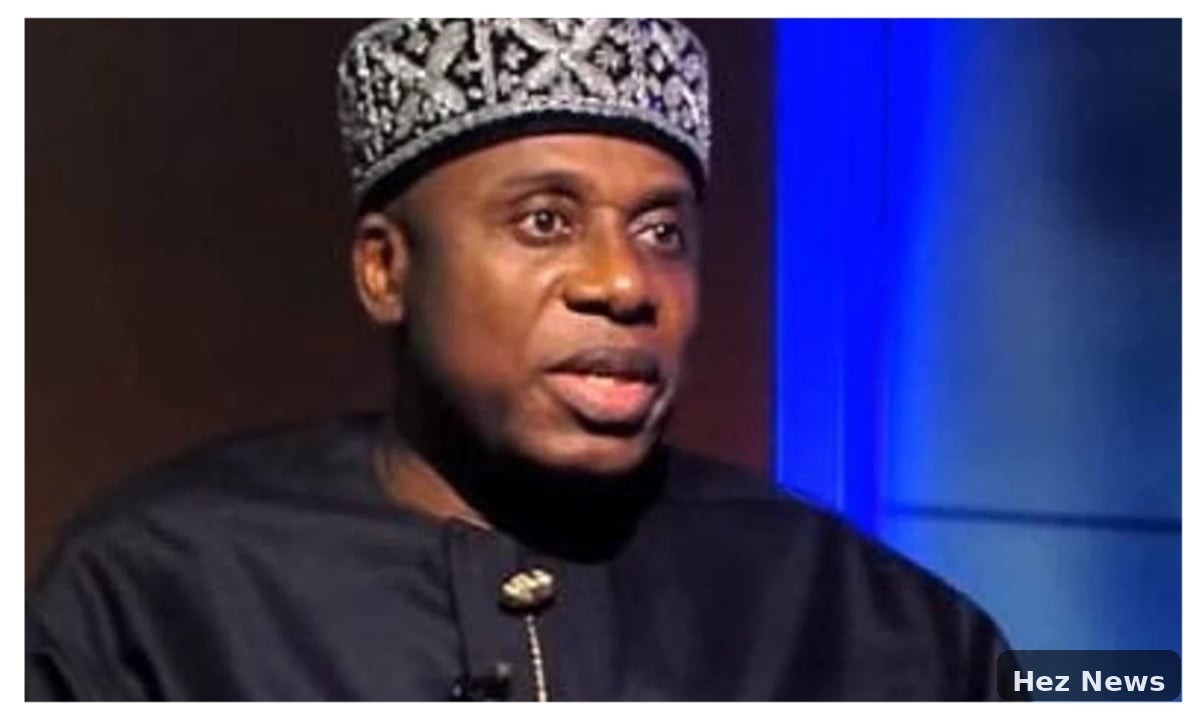
In a recent statement, Rotimi Amaechi, the African Democratic Congress (ADC) presidential running mate, made headlines by revealing that he had technically resigned from the government of former President Muhammadu Buhari. This revelation adds a new layer to the ongoing political discourse as Nigeria prepares for the upcoming elections.
A Shift in Political Landscape
Amaechi's comments come at a pivotal moment when political alignments are crucial to the success of any candidate. As the elections draw closer, the ADC is positioning itself as a viable alternative to the established parties. The former minister's assertion of a technical resignation indicates his distance from the Buhari administration, which has faced numerous criticisms over governance and economic challenges.
What Does 'Technical Resignation' Mean?
During his announcement, Amaechi elaborated on what he meant by a technical resignation. He stated that while he remained in the cabinet, his actions and decisions did not align with the policies of the Buhari administration. This concept of a technical resignation suggests that he was effectively disengaging from the government's operations while still holding the title of minister.
Implications for the ADC
The ADC has been striving to increase its visibility and influence in Nigerian politics. With Amaechi as the presidential running mate, the party aims to attract voters who are disillusioned with the existing political parties. His experience as a former minister and governor positions him as a significant figure in the campaign.
Amaechi's strategic distancing from the Buhari administration also allows the ADC to distance itself from the controversies that have plagued the former president's tenure, including economic downturns and security issues faced by the nation.
Public Reaction
The public's response to Amaechi's announcement has been mixed. Supporters of the ADC view it as a bold move that reflects integrity and a commitment to reform, while critics argue that it is merely a political maneuver to gain favor ahead of the elections.
Political analysts suggest that this development could either bolster the ADC's credibility or backfire if voters perceive it as a lack of genuine commitment to change. The coming weeks will be crucial as the ADC ramps up its campaign efforts.
Conclusion
As Nigeria approaches another election cycle, statements like Amaechi's are likely to shape the narratives and strategies of various political parties. The ADC's approach, coupled with Amaechi's experience, could potentially alter the landscape of Nigerian politics, making it a focal point for voters seeking alternatives.




Leave a Comment