

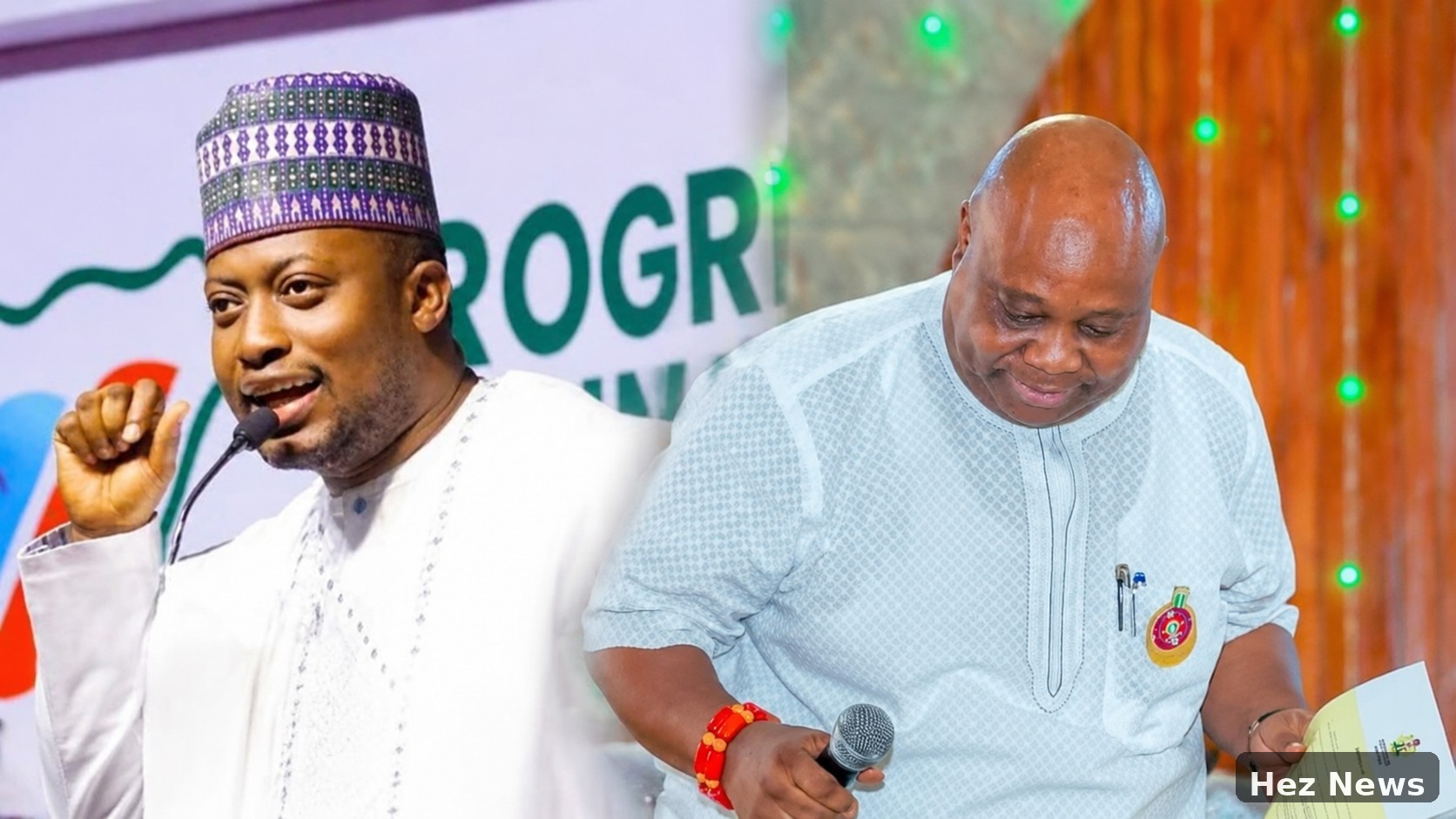
The recent Osun gubernatorial election has sparked discussions about the strengths and weaknesses of the candidates involved. Notably, Dayo Israel, a prominent member of the All Progressives Congress (APC), has come out to defend Senator Ademola Adeleke's dancing, stating that it should not be viewed as a liability.
During a media interaction, Israel emphasized that Adeleke's vibrant personality and his ability to connect with the masses have often been misinterpreted. He argued that Adeleke's affinity for dancing reflects his approachability and relatability to the electorate. “Adeleke’s dancing is not a weakness; it’s part of his charm. It shows he is in touch with the people,” Israel remarked.
Adeleke's Connection with the People
Senator Ademola Adeleke, the candidate of the People’s Democratic Party (PDP), has been known for his energetic campaign style, which includes dancing at various rallies. This has drawn mixed reactions, with some critics arguing that it undermines the seriousness of his political ambitions. However, Israel believes this perception is misguided.
“In Nigeria, our politicians should be able to connect with the youth and the general populace. Adeleke’s dance moves resonate with many who see him as one of their own,” he noted. This sentiment reflects a broader trend in Nigerian politics where candidates are increasingly using cultural elements to engage with voters.
Political Landscape in Osun
The Osun election has been a focal point for political discourse in Nigeria. With various candidates vying for the governorship, the dynamics of the race have been shaped by both traditional political strategies and modern campaign techniques. Adeleke's unique style has differentiated him from his opponents.
Israel's defense of Adeleke also highlights the evolving nature of political campaigns in Nigeria, where charisma and personality can play significant roles in swaying public opinion. “What matters is the ability to relate to constituents and understand their needs,” he added.
Public Response and Social Media Impact
Public reactions to Adeleke’s dance have been widespread, particularly across social media platforms. Many supporters have taken to platforms like Twitter and Instagram to showcase their appreciation for his approachable nature. Conversely, some critics have mocked his dancing, viewing it as unprofessional for a political leader.
The conversation around Adeleke’s style reflects a larger cultural shift in Nigeria, where younger voters are increasingly engaging with political candidates who share their values and lifestyles. This generational divide is crucial as Nigeria approaches future elections.
Conclusion
As the political landscape continues to evolve, the narrative surrounding candidates like Adeleke will likely focus more on personal connections rather than traditional political decorum. Dayo Israel's remarks serve to remind us that in the realm of Nigerian politics, authenticity and the ability to connect with the electorate can be just as important as policy proposals and political experience.

Leave a Comment