

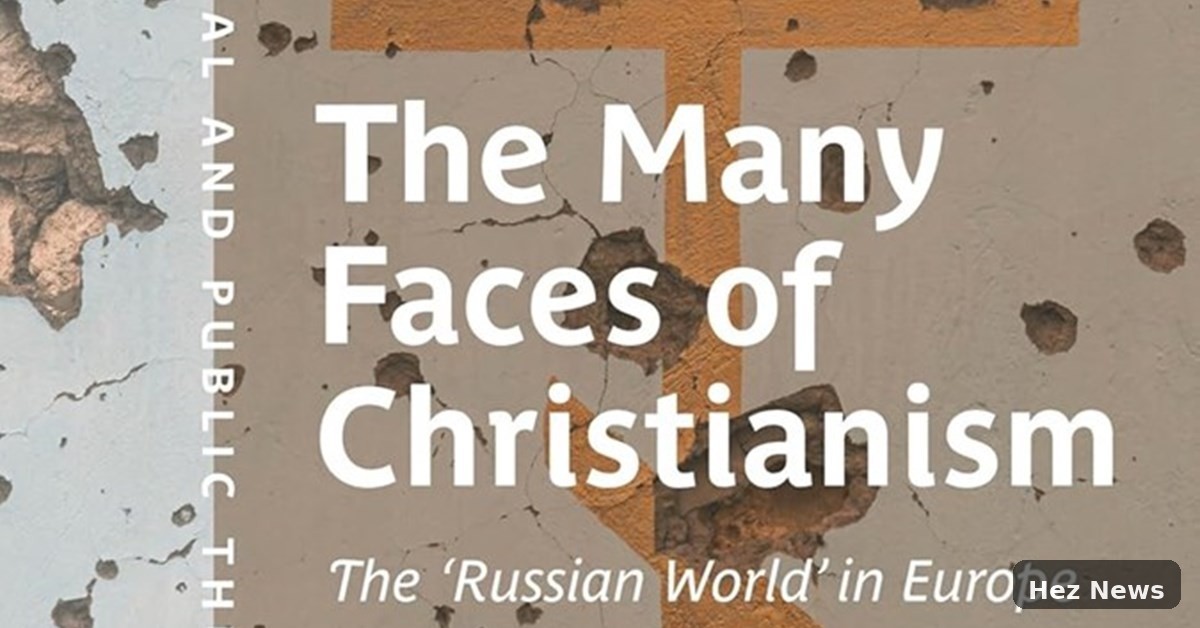
The Many Faces of Christianism: The “Russian World” in Europe is an insightful collection edited by Marietta van der Tol, Sophia R. C. Johnson, Petr Kratochvíl, and Zoran Grozdanov. This book aims to broaden our understanding of Christianism, a term that denotes the intertwining of Christianity with far-right political ideologies.
Understanding Christianism
Christianism, as discussed in this collection, refers to the fusion of religious beliefs with far-right political agendas. In recent years, various factions across Europe have increasingly embraced this ideology, and the book seeks to explore how these narratives are shaping political discourse. For readers in Nigeria, where religion plays a significant role in public life and politics, these discussions provide a relevant lens through which to view the complexities of faith and ideology.
The Far-Right Discourse in Europe
The editors have brought together a range of contributions that highlight the emergence of far-right rhetoric within European countries. These discourses often reflect a blend of nationalism and religious identity, which can resonate similarly in various contexts, including Nigeria, where ethnic and religious identities are also intertwined in political narratives.
Implications for Global Politics
As the world witnesses shifting political landscapes, the implications of Christianism extend beyond Europe. The rise of populist movements that utilize religious imagery and rhetoric is a phenomenon that is not limited to the West. In Nigeria, the interplay between religion and politics has historically influenced elections and public policy. Understanding these patterns in Europe may offer critical insights for Nigerian audiences, particularly in light of upcoming elections and ongoing political debates.
A Call for Broader Discourse
The collection urges readers to reconsider established definitions of both Christianity and political alignment. It posits that the current global climate requires a nuanced understanding of how religious identity can be co-opted for political gain. The discussions presented may serve as a warning against the dangers of such ideologies taking root in societies where religious and cultural identities are already fragile.
Conclusion
As Nigeria continues to navigate its own complex political landscape, the themes explored in The Many Faces of Christianism are particularly pertinent. The book not only expands the definition of Christianism but also invites readers to critically engage with the implications of merging faith with political ideology. For those interested in the intersection of religion and politics, this collection offers valuable perspectives that resonate across borders.


Leave a Comment