

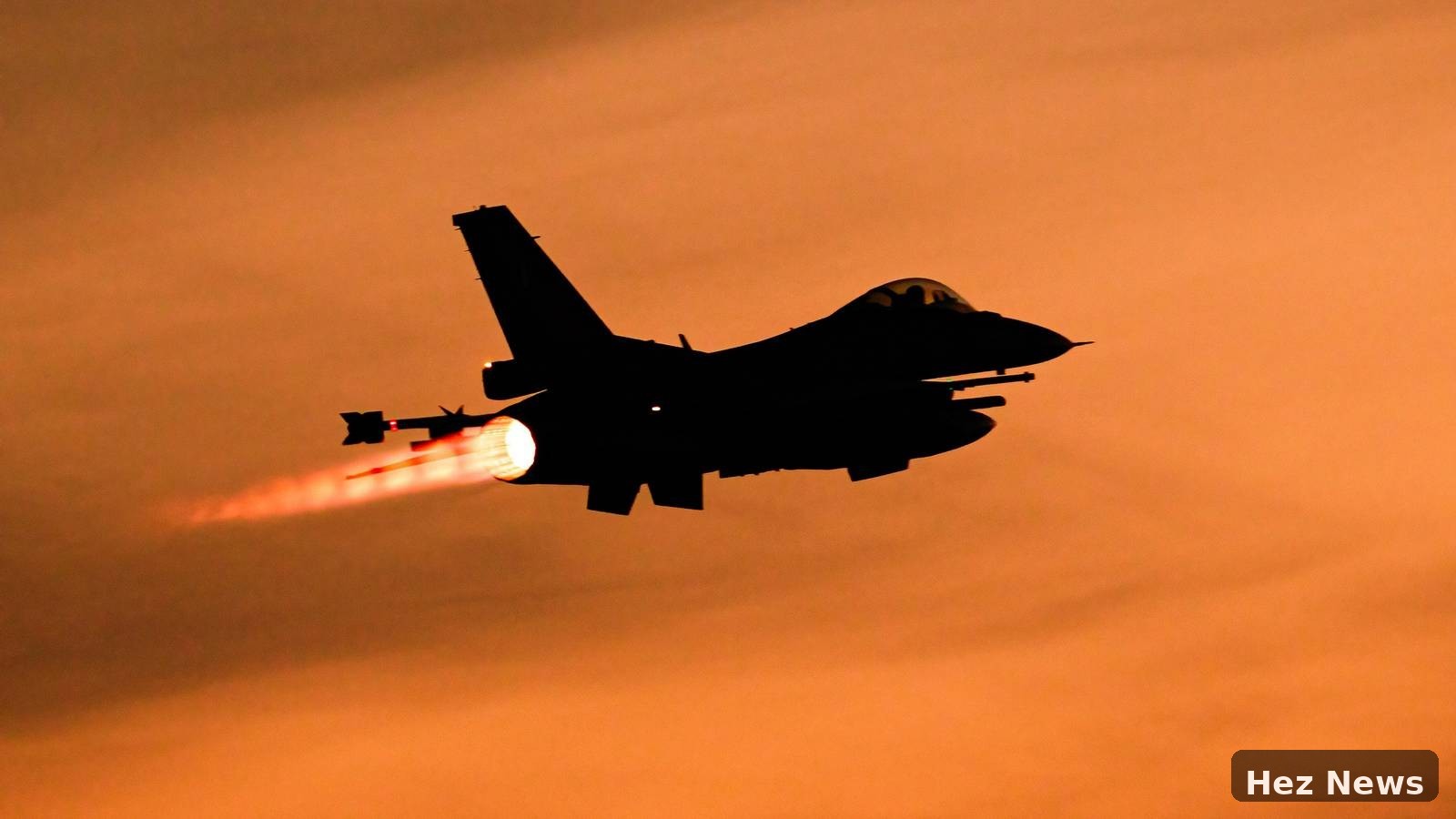
The F-16 Fighting Falcon, a staple of modern air forces, is renowned for being the most produced fighter jet in history. Originally developed by General Dynamics and currently manufactured by Lockheed Martin, this versatile aircraft has been in service for over fifty years. Yet, one question arises: why does the F-16 lack a thrust vectoring nozzle despite advancements in military aviation technology?
Historical Context of the F-16
Since its introduction in the late 1970s, the F-16 has undergone numerous upgrades and modifications. It was designed with a focus on agility and speed, which made it a favorite among air forces worldwide, including Nigeria's Nigerian Air Force (NAF). The jet's success is attributed to its lightweight design, low operating costs, and the ability to engage in both air-to-air and air-to-ground combat.
Understanding Thrust Vectoring
Thrust vectoring technology allows an aircraft to direct its engine thrust in different directions, enhancing maneuverability. This feature is particularly beneficial in dogfights, where rapid changes in direction can mean the difference between victory and defeat. While advanced fighter jets like the F-22 Raptor and F-35 Lightning II have incorporated this technology, the F-16 has remained without it.
Reasons for the Absence of Thrust Vectoring
One primary reason for the F-16's lack of thrust vectoring is its original design philosophy. The jet was intentionally built with a high thrust-to-weight ratio and delta wing structure, which already grants it impressive maneuverability. Engineers prioritized a balance between performance, cost, and complexity, deeming thrust vectoring unnecessary for the F-16's intended operational roles.
Additionally, retrofitting thrust vectoring onto the F-16 would require extensive modifications. Such changes could lead to increased costs and potential reliability issues, factors that many air forces are keen to avoid, especially in nations with limited defense budgets.
Nigerian Perspective on Fighter Jet Technology
In Nigeria, where the military is continuously seeking to enhance its air capabilities, the F-16 remains a point of interest. The NAF is currently undergoing modernization efforts, with an emphasis on acquiring advanced aircraft that can compete on the global stage. Although the F-16 may not include thrust vectoring, its proven track record and adaptability make it a compelling choice for Nigerian military planners.
Conclusion
While the F-16 Fighting Falcon may not feature thrust vectoring, its historical significance and performance continue to resonate with air forces around the world. For Nigeria, investing in such aircraft could bolster its defense capabilities, even as it explores the latest technologies in the ever-evolving field of military aviation.






Leave a Comment