

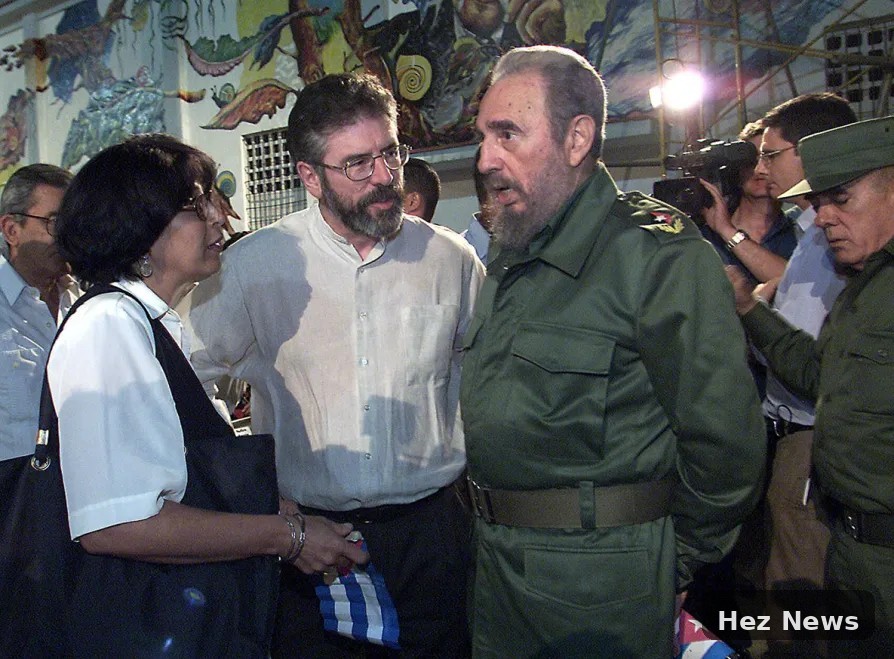
Today marks the centenary of Fidel Castro, the iconic Cuban revolutionary who played a pivotal role in shaping Cuba's political landscape for nearly five decades. While Western narratives often portrayed him as a tyrant, many liberation movements and anti-colonial struggles around the world celebrated his contributions.
Castro's Influence on Global Politics
Fidel Castro's leadership was characterized by his staunch anti-imperialist stance, which resonated with countries that were grappling with colonial legacies. His friendship with nations like Ireland exemplified a shared vision against imperialist forces. Castro's policies and rhetoric inspired various liberation movements, particularly in Africa, where many viewed him as a beacon of hope.
The Cuban Revolution and its Impact
The Cuban Revolution, which culminated in 1959, was not just a victory for the Cuban people; it symbolized a broader struggle against colonialism and exploitation. Castro's government implemented significant reforms in education and healthcare, prioritizing the welfare of the Cuban populace. These policies have often been contrasted with the conditions in many African nations, including Nigeria, where post-colonial challenges continue.
Nigeria's Connection to Castro
Nigeria, like many African nations, faced its unique set of challenges after gaining independence. The struggles against corruption, economic instability, and external influences parallel some of the themes present in Castro's governance. In the 1970s and 1980s, Castro's Cuba provided support to liberation movements in Africa, including Nigeria, showcasing solidarity in the fight against colonial and imperialist forces.
Lessons from Castro's Leadership
As Nigeria reflects on its own path, the lessons drawn from Castro’s policies and their impacts can provide valuable insights. Discussions around self-determination, national sovereignty, and the importance of social justice resonate deeply within the Nigerian context. Castro's legacy challenges current leaders to prioritize the needs of their citizens over external influences.
Conclusion
As we commemorate the centenary of Fidel Castro's birth, it's essential to recognize the complexities of his legacy. While opinions on his rule may vary, his commitment to anti-imperialism and solidarity with oppressed nations remains a significant aspect of his impact on global politics. For Nigeria, understanding Castro's influence could serve as a catalyst for renewed discussions on sovereignty and national identity in the face of global challenges.






Leave a Comment