

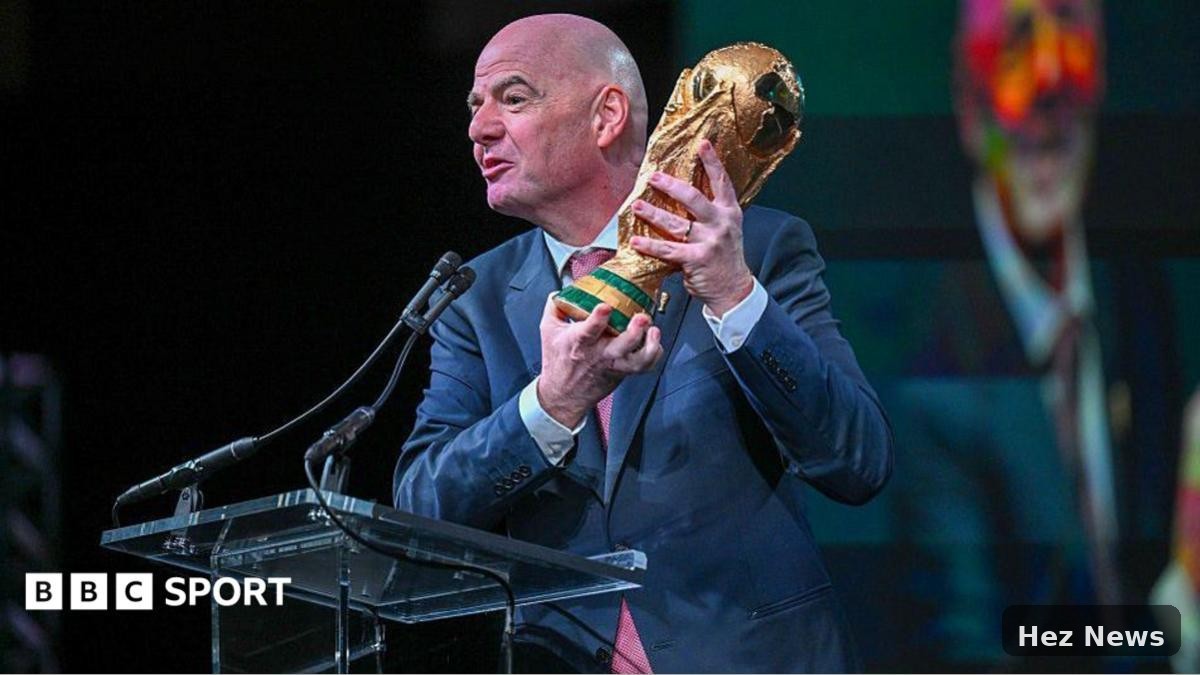
The prospect of a 64-team World Cup has been a hot topic among football fans and officials alike, especially under the leadership of Gianni Infantino, FIFA's president for the past decade. Infantino's tenure has been marked by a philosophy that embraces expansion—more tournaments, more games, and ultimately, more revenue.
Infantino's Expansion Strategy
Since taking office, Infantino has advocated for increasing the scale of FIFA's competitions. The upcoming 2026 World Cup is set to be the first to feature 48 teams, a significant jump from the traditional 32. This change aims not only to enhance the competitive landscape but also to maximize viewership and financial gain.
Nigeria, a nation with a rich football heritage, stands to benefit from such expansion. The Super Eagles have consistently demonstrated their prowess on the African continent, and more slots in the World Cup could lead to greater representation of African teams, which is critical for the development of football in the region.
The Economic Implications
With more teams participating, there is a potential for increased ticket sales, merchandise, and broadcasting rights. The proposed 64-team format would allow FIFA to tap into new markets, which could be particularly beneficial for developing football nations like Nigeria. As the sport grows in popularity across Africa, hosting more teams could inspire a new generation of players.
Challenges Ahead
However, the push for a larger tournament is not without its challenges. Critics argue that expanding the World Cup to 64 teams could dilute the quality of the competition. For a country like Nigeria, while the opportunity for more representation is appealing, there are concerns about whether the national team can maintain its competitive edge on a larger stage.
Moreover, logistical challenges such as scheduling, venue capacity, and the overall management of a larger tournament must be addressed. As the football community weighs the pros and cons, the focus remains on how this expansion aligns with the growth and sustainability of the sport.
Nigeria's Role in the Future of Football
As discussions continue, Nigeria's football authorities and fans alike are hopeful that the Super Eagles can take advantage of this potential increase in World Cup slots. The passion for football runs deep in Nigeria, and participating in a 64-team World Cup could provide a platform for showcasing local talent on an international scale.
The evolution of the World Cup format under Gianni Infantino’s leadership reflects a broader trend in global sports towards inclusivity and expansion. As the footballing world prepares for the future, Nigeria’s involvement in this journey remains crucial.

Leave a Comment