

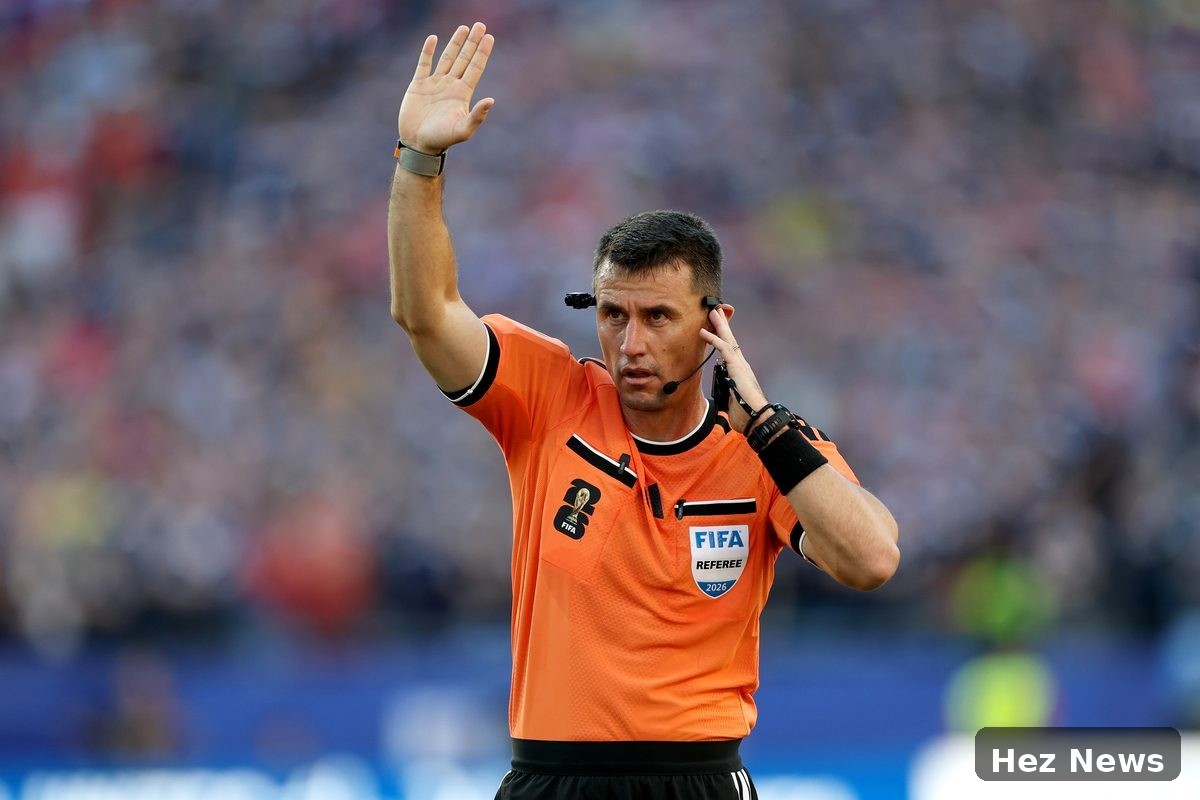
The recent controversy surrounding FIFA referee Ilgiz Tantashev during the World Cup has revealed surprising insights into his performance. New data indicates that the Uzbek official was experiencing significant levels of heat strain, which may have impaired his decision-making abilities on the pitch.
Understanding the Impact of Heat on Referees
Referees play a crucial role in maintaining the integrity of football matches, yet their performance can be significantly affected by environmental conditions. During high-stakes games such as those in the World Cup, heat stress can lead to impaired judgment, impacting the flow of the game and the fairness of officiating.
Reports suggest that Tantashev, who officiated France's last-16 victory, faced extreme temperatures that could have contributed to his controversial decisions during the match. This revelation raises questions about the preparation and support provided to referees in such demanding conditions.
Nigerian Perspective on Officiating Standards
In Nigeria, football is more than just a sport; it is a unifying force that brings together people from diverse backgrounds. The performance of referees is often scrutinized, and fans can be vocal about their dissatisfaction when they perceive unfair officiating. As discussions about Tantashev's performance continue, it is essential to consider how referees are trained to cope with extreme conditions, especially in the hot climates often found in African countries.
Moreover, this incident prompts a broader conversation about the importance of fitness and wellness for referees, particularly in regions with high temperatures. The Nigerian Football Federation may need to advocate for better training programs that prepare officials for the physical demands of officiating in various weather conditions.
Implications for Future Tournaments
The findings regarding Tantashev's heat strain could lead to significant changes in how referees are evaluated and supported during major tournaments. FIFA may need to implement stricter guidelines regarding hydration, breaks, and the use of technology to monitor referees' physical conditions during matches.
As the world of football evolves, ensuring that officials have the necessary resources to perform at their best is critical. This incident serves as a reminder of the challenges referees face and the need for continuous improvement in officiating standards.
Conclusion
The controversy surrounding Ilgiz Tantashev may have sparked outrage, but it has also opened up an important dialogue about the conditions referees face during high-pressure games. As Nigeria continues to develop its football infrastructure, learning from international experiences can help enhance the quality of officiating in domestic leagues.





Leave a Comment