

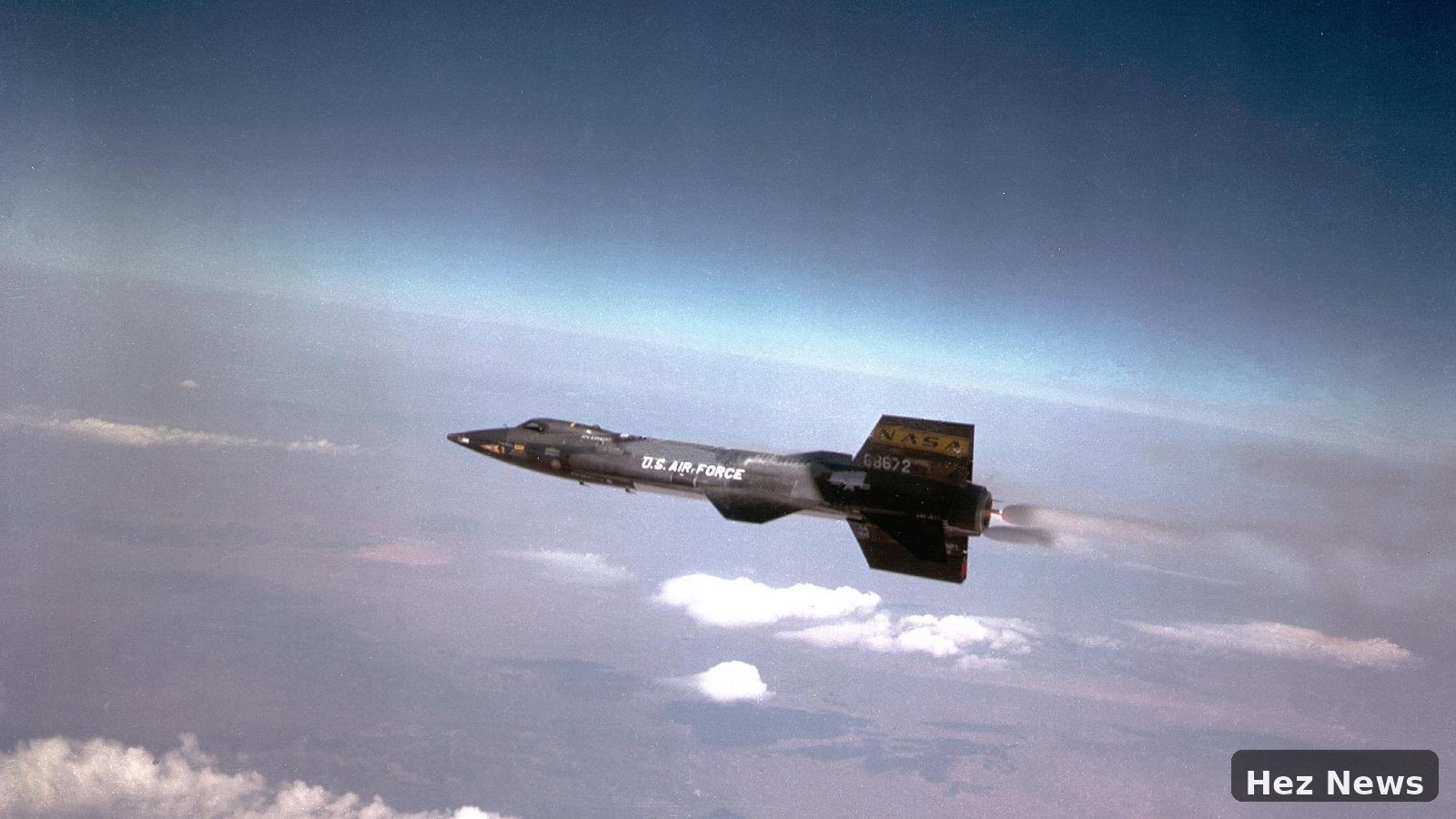
On August 22, 1963, the world witnessed an extraordinary achievement in aviation history when U.S. Air Force Captain Joe Walker piloted the X-15 rocket plane to a record-breaking altitude. This flight marked a significant milestone in space exploration, as Walker ascended to an astonishing height of over 67 miles (approximately 108 kilometers) above the Earth's surface.
Breaking New Heights
Captain Walker's journey took him approximately 5 miles (or 8 kilometers) beyond the widely accepted boundary of space, commonly referred to as the Kármán line. This achievement not only set a world altitude record but also showcased the capabilities of the X-15 program, which was instrumental in advancing the understanding of high-speed flight and aerodynamics.
Significance of the X-15 Program
The X-15 program was developed during the height of the Cold War, a time when technological superiority was of utmost importance. The program aimed to explore the limits of human flight and gather data that would be crucial for future space missions. The insights gained from the X-15 flights have had a lasting impact on both military aviation and the space program.
For Nigeria, a country that is increasingly investing in space technology and innovation, the achievements of the X-15 program serve as an inspiration. As Nigeria seeks to enhance its capabilities in satellite technology and space research, the pioneering spirit of aviators like Walker can motivate the next generation of Nigerian scientists and engineers.
Legacy and Future Aspirations
The legacy of Captain Joe Walker and the X-15 missions extends far beyond the records they set. These flights paved the way for manned space missions, including the Apollo program that eventually landed humans on the moon. As Nigeria progresses in its own space endeavors, it is essential to remember the foundational work laid by early astronauts and aviators.
Today, as we reflect on this historic flight, it is crucial to recognize the importance of fostering a robust space program in Nigeria. The nation's commitment to advancing its scientific and technological infrastructure can lead to significant contributions to global space exploration.
Conclusion
The flight of the X-15 on August 22, 1963, represents a pivotal moment in the history of aviation and space exploration. It serves as a reminder of what is possible when innovation, determination, and ambition converge. As Nigeria continues to carve its own path in the realm of space technology, the achievements of pioneers like Joe Walker will undoubtedly inspire future generations to reach for the stars.






Leave a Comment