

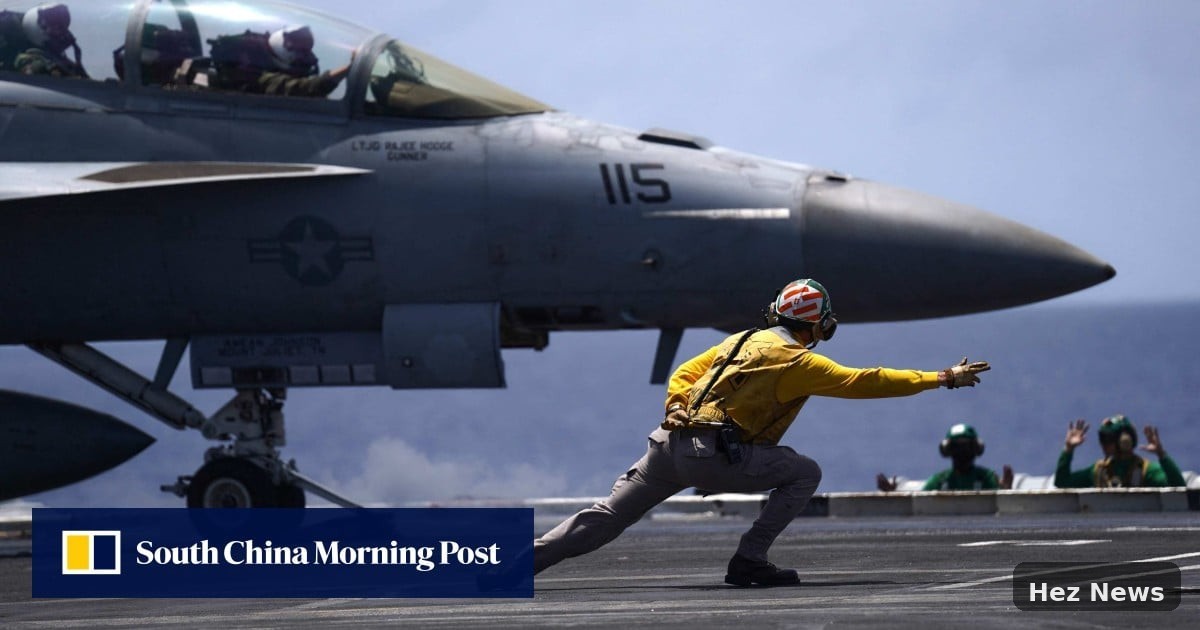
The recent US-led Rim of the Pacific Exercise (Rimpac) has seen advanced technological integration among allied forces, raising significant questions about its implications for global geostrategic dynamics, particularly concerning China.
Understanding Rimpac and Its Objectives
Rimpac, the world's largest international maritime exercise, takes place biennially and includes participation from numerous countries. This year, the exercise has showcased a range of advanced military technologies, from Japanese land-based anti-ship missiles to sophisticated US attack submarines and autonomous drone boats.
The primary aim of Rimpac is to enhance interoperability among allied forces, integrating troops on land with aerial, surface, and underwater assets. By forming a single cohesive network, these allied forces can effectively find, track, and engage maritime threats.
Implications for Global Security
The integration of such advanced technologies during Rimpac signifies a shift in military strategy that could have far-reaching consequences. As nations like Japan and the US bolster their military capabilities, China may feel increasingly cornered. The exercise not only serves as a demonstration of military might but also sends a clear message to Beijing about the preparedness of its rivals.
For Nigeria and other nations observing these developments, the implications are profound. Increased military cooperation among Western allies could lead to a more polarized global landscape, where nations are compelled to take sides in a potential conflict.
Nigeria's Position in Global Military Dynamics
Nigeria, as a critical player in West Africa, has its own military challenges, particularly concerning maritime security in the Gulf of Guinea. The lessons learned from Rimpac could inform Nigeria's military strategy, especially in terms of technology integration and cooperative security measures.
As the Nigerian government seeks to modernize its armed forces, observing the technological advancements showcased at Rimpac could provide valuable insights. Collaborations with countries like the US and Japan could enhance Nigeria's capability to address maritime threats, including piracy and illegal fishing.
Conclusion
In conclusion, the deeper tech integration seen during Rimpac not only reshapes the military landscape but also serves as a litmus test for China's regional ambitions. For Nigeria, the evolving global military dynamics present both challenges and opportunities. As nations adapt to this new reality, it is imperative for Nigeria to strategically position itself to safeguard its interests in an increasingly complex world.





Leave a Comment