

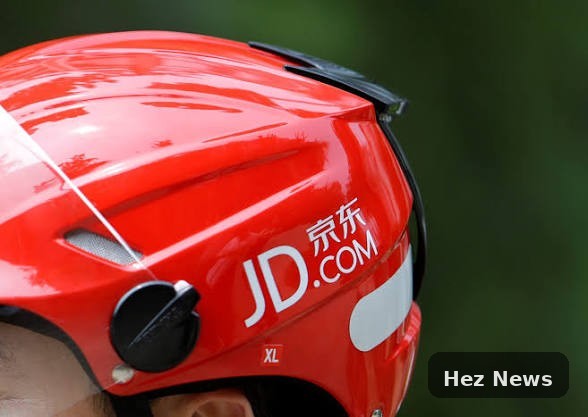
In a significant technological advancement, JD.com, a prominent Chinese e-commerce platform, has launched an artificial intelligence-powered smart helmet aimed at enhancing the safety and efficiency of food delivery riders. This innovation comes as tech companies seek to integrate AI solutions into everyday work environments, moving beyond traditional smartphone applications.
Revolutionizing Food Delivery
The introduction of the AI-smart helmet marks a pivotal moment in the food delivery industry, particularly in regions like Nigeria where food delivery services have surged in popularity. With the rapid growth of the gig economy, ensuring the safety of delivery riders is becoming increasingly critical.
The helmet is designed to assist riders by providing real-time data, including navigation support and traffic updates, which can help minimize delivery times and enhance rider safety. This is especially relevant in urban areas where traffic congestion is a common challenge.
Implications for Nigeria's Delivery Sector
Nigeria's food delivery market has witnessed exponential growth, driven by the rise of mobile applications and changing consumer behaviors. As more people turn to food delivery services, the safety of riders is paramount. The AI helmet could serve as a model for local companies, encouraging them to adopt similar technologies.
Local delivery platforms can benefit from leveraging such innovations to enhance rider safety and improve service quality, potentially leading to a more competitive market. The integration of AI into logistics and delivery is not just a trend but a necessary evolution to meet the increasing demands of consumers.
Future Prospects
While JD.com's initiative is a step forward, it also raises questions about the future of technology in Nigeria's delivery sector. As the country continues to embrace technological advancements, local businesses must consider how to implement AI-driven solutions to remain relevant.
Moreover, the collaboration between tech companies and delivery service providers could pave the way for innovative solutions that address the unique challenges faced by riders in Nigeria. This could include features that help monitor rider health, fatigue levels, and overall safety on the road.
Conclusion
The launch of JD.com's AI-smart helmet is a promising development that could inspire similar initiatives in Nigeria. As the local market evolves, embracing such technologies will be essential for improving safety and efficiency in food delivery services. With the right investments in technology, Nigerian delivery companies can secure safer working environments for their riders, ultimately enhancing customer satisfaction.




Leave a Comment