

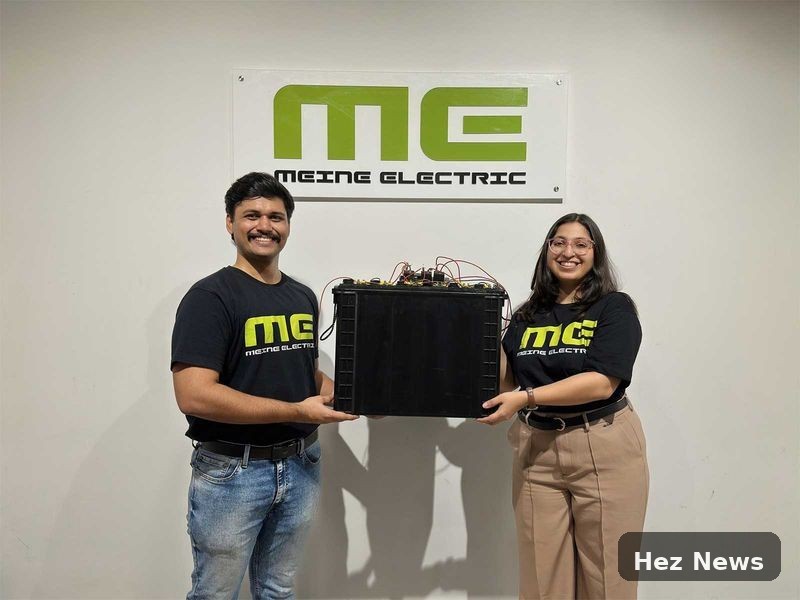
Chennai (Tamil Nadu) [India], July 14: In a groundbreaking development, Meine Electric, an Indian deep-tech startup, has successfully created the world's first fast-charging iron-air battery system. This innovation is set to revolutionize long-duration energy storage (LDES), a crucial component in the global shift towards sustainable energy solutions.
Significance of the Iron-Air Battery
This new battery technology is particularly noteworthy for its potential to provide a cleaner, more efficient alternative to conventional energy storage systems. As Nigeria continues to grapple with energy challenges, innovations like these could offer solutions for more reliable power supply, particularly in rural areas where access to electricity remains a significant hurdle.
How It Works
The iron-air battery operates by utilizing iron as the primary energy storage material. It promises a faster charging time compared to traditional lithium-ion batteries, making it suitable for various applications, including electric vehicles and grid storage. With the increasing demand for energy storage solutions in Nigeria, this technology could play a pivotal role in enhancing energy security.
Potential Impact on Nigeria
As Nigeria seeks to modernize its energy infrastructure, adopting advanced technologies like the iron-air battery could significantly improve power availability and reliability. The ability to store energy for extended periods can help mitigate the effects of power outages that many Nigerians face daily.
Moreover, the cost-effectiveness of iron-air batteries may provide an opportunity for local manufacturers to develop and produce energy storage systems tailored to the Nigerian market. This could not only enhance energy access but also create jobs and stimulate economic growth.
Global Context
The introduction of the iron-air battery comes at a time when the world is increasingly focused on sustainable energy solutions. Countries are investing heavily in renewable energy technologies to combat climate change and reduce dependence on fossil fuels. Nigeria, being a signatory to various climate agreements, is also under pressure to meet its renewable energy targets.
As the demand for clean energy solutions continues to rise, innovations like those from Meine Electric are vital for transitioning to a greener economy. The technology has garnered independent validation, indicating its readiness for broader application.
Conclusion
The fast-charging iron-air battery developed by Meine Electric represents a significant leap forward in energy storage technology. Its implications for countries like Nigeria, which are striving for improved energy access and sustainability, are profound. As the nation looks towards a future powered by renewable energy, embracing such innovations will be essential for achieving its energy goals.




Leave a Comment