

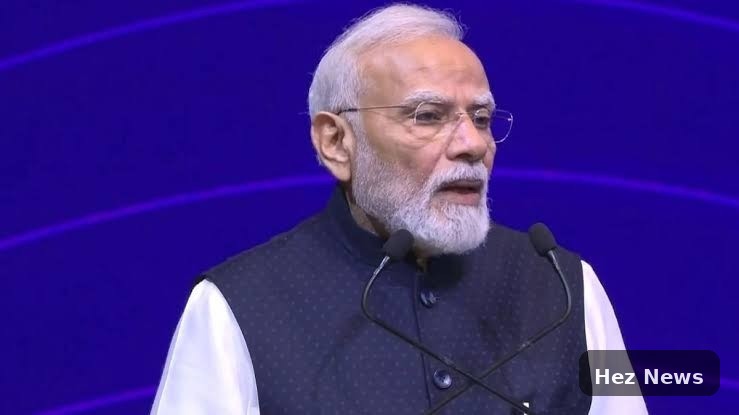
NEW DELHI: Prime Minister Narendra Modi addressed leaders from the semiconductor industry on Thursday, emphasizing India's potential as a reliable alternative for global manufacturing. His remarks come as the Indian government is actively taking measures to position the nation as a preferred destination for semiconductor production.
During his speech, Modi highlighted the importance of the semiconductor sector in today's technology-driven world, noting that these chips are vital for various industries, including electronics, automotive, and telecommunications. He stated, "Our government is committed to ensuring that India emerges as a global manufacturing hub for semiconductors."
India's Semiconductor Vision
Modi's announcement is part of a broader initiative to enhance India's presence in the global supply chain, especially in the semiconductor space. As countries around the world scramble to secure their semiconductor supplies, India aims to attract foreign investment and technological partnerships.
The Indian government has set ambitious targets, including plans to spend over $10 billion to create a robust semiconductor manufacturing ecosystem. This initiative is expected to not only boost local production but also create jobs and drive innovation in technology.
Nigeria's Interest in Semiconductor Development
For Nigeria, which is increasingly becoming a technology hub in Africa, the developments in India’s semiconductor sector may present opportunities for collaboration. As Nigeria seeks to enhance its technological infrastructure, learning from India’s journey could be pivotal.
Experts suggest that Nigeria could benefit from partnerships with Indian firms specializing in semiconductor manufacturing. This collaboration could help Nigeria in building its own manufacturing capabilities, subsequently reducing reliance on imports for critical technology components.
Global Implications
Modi's efforts are not just about positioning India as a manufacturing hub, but also about establishing a stable supply chain that can withstand global disruptions. The COVID-19 pandemic highlighted vulnerabilities in the semiconductor supply chain, prompting nations to rethink their strategies.
India's push could lead to a more diversified semiconductor market, which might help mitigate supply risks for countries like Nigeria. As Nigeria aims to enhance its tech ecosystem, a reliable semiconductor supply could be crucial for local tech startups and industries.
Looking Ahead
As India moves forward with its semiconductor ambitions, the world will be watching closely. The Indian government’s commitment to fostering a conducive environment for semiconductor manufacturing could set a precedent for other nations, including Nigeria, to follow.
In conclusion, Prime Minister Modi's bold vision for India's semiconductor industry not only aims to transform the nation's economy but also offers a potential roadmap for Nigeria and other developing countries looking to strengthen their technological capabilities.






Leave a Comment