

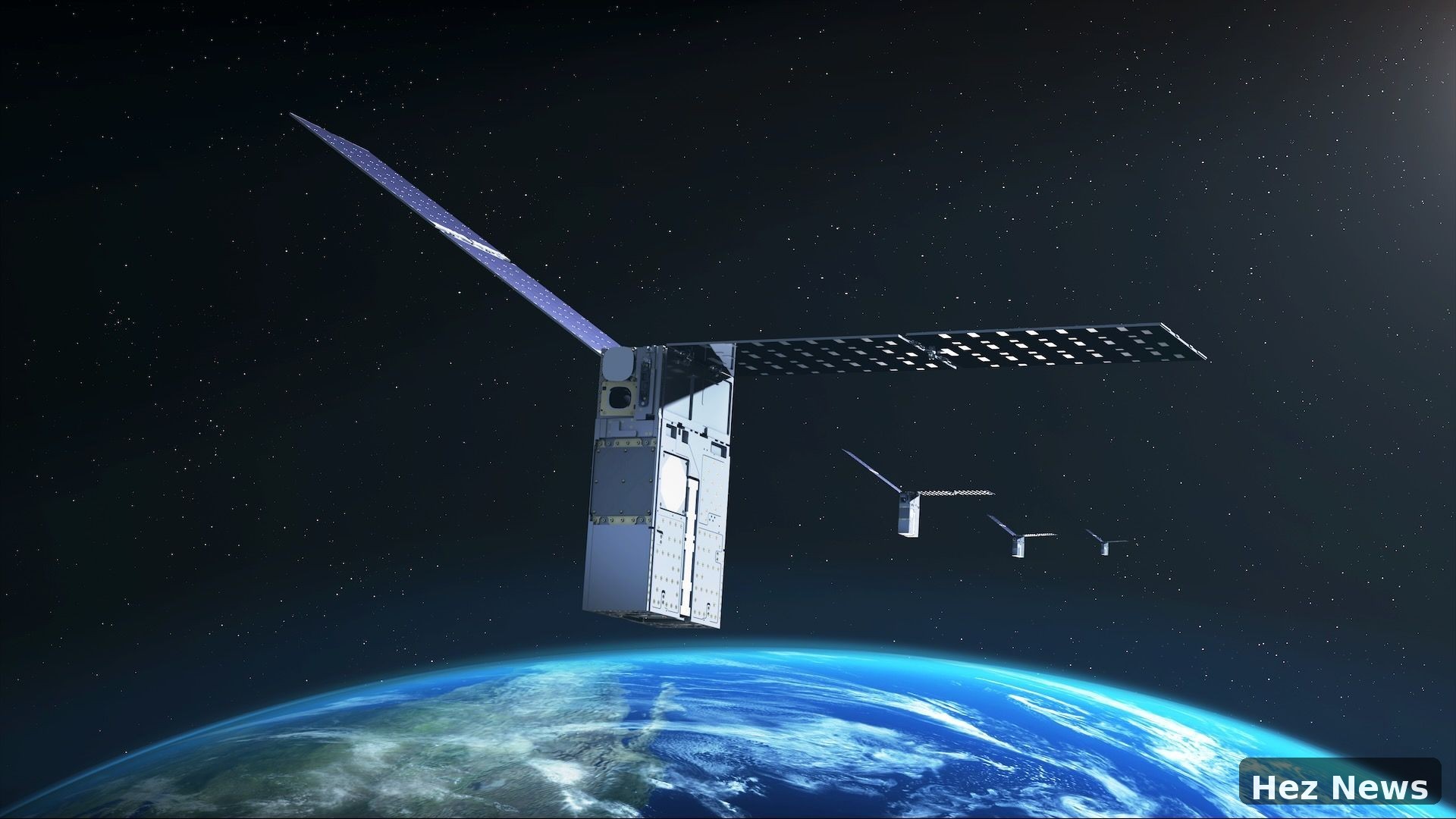
NASA has made a significant breakthrough in space navigation with its latest experiment involving the Starling mission. This mission, which comprises a fleet of four cubesats orbiting in low Earth orbit (LEO), is testing an innovative approach to navigation that does not rely on traditional GPS systems.
Understanding the Innovation
In an era where satellite technology plays a crucial role in various sectors, the dependency on GPS systems poses challenges, especially in space where signals can be weak or entirely unavailable. The Starling mission seeks to address these challenges by utilizing other satellites as moving landmarks.
The experiment could pave the way for more reliable navigation solutions in space, particularly for missions that venture beyond Earth's atmosphere. This is especially relevant for nations like Nigeria, which are increasingly investing in satellite technology and space exploration.
Potential Implications for Nigeria
Nigeria has been making strides in satellite technology, with initiatives such as the Nigerian Communications Satellite (NIGCOMSAT) and the recent launch of the Nigeria-United States joint satellite project. These advancements highlight the country's commitment to enhancing its capabilities in space.
If successful, NASA's GPS-free navigation system could inspire similar research and development efforts in Nigeria, potentially leading to improved navigation systems for local satellites and enhancing the country’s capabilities in areas such as telecommunications, agriculture, and disaster management.
The Starling Mission's Objectives
The primary objective of the Starling mission is to demonstrate that satellites can navigate effectively without relying on GPS. By using other satellites as reference points, the mission aims to establish a new standard for future space navigation technologies.
NASA's approach also seeks to improve the autonomy of satellite operations, which could be crucial for deep space missions where communication delays with ground control can hinder timely decision-making.
Conclusion
The Starling mission represents a significant step forward in satellite navigation technology. For countries like Nigeria, which are aspiring to expand their presence in space and satellite technology, this development could serve as a catalyst for innovation and growth in the industry.
As the world watches NASA's experiment unfold, it will be interesting to see how this technology evolves and potentially benefits nations looking to harness the power of space for development.





Leave a Comment