

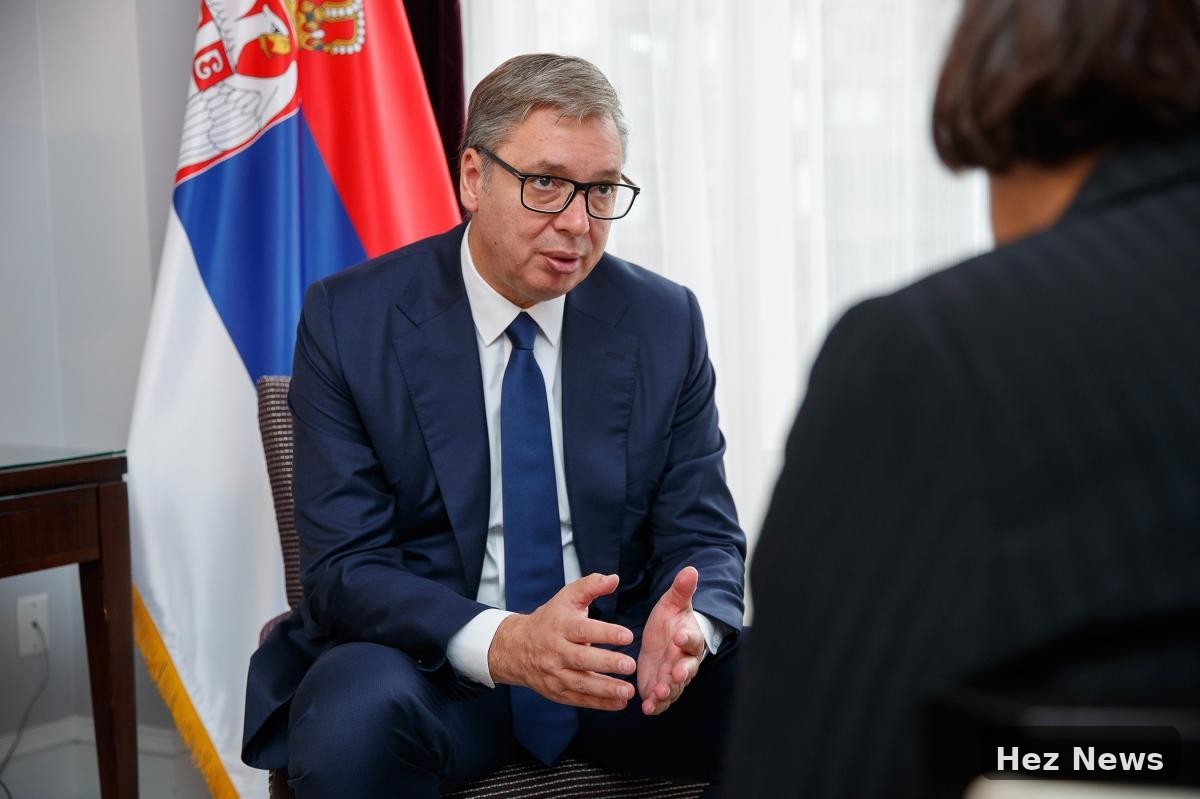
Aleksandar Vucic, the President of Serbia, has recently voiced his concerns regarding what he perceives as a double standard among world leaders concerning the situation in Kosovo. This statement has sparked discussions about the geopolitical dynamics at play in the Balkans and beyond.
Geopolitical Landscape
In the current geopolitical climate, it is challenging to categorize President Vucic's stance definitively. His ability to navigate these complex waters has led to a unique position where he often seeks to maintain a balance. As a seasoned chess player, Vucic may be employing a strategy that allows him to keep options open while addressing the delicate issues surrounding Kosovo.
Concerns Over International Response
During a recent address, Vucic criticized the response of global powers to the ongoing tensions in Kosovo. He highlighted the perceived inconsistency in how different nations react to similar situations, suggesting that some countries receive a more favorable treatment than others.
This criticism resonates particularly in Nigeria, where the implications of international relations and diplomatic strategies can have far-reaching effects. Nigeria has often been on the receiving end of various international policies, making the understanding of global double standards critical for its own diplomatic endeavors.
Background on Kosovo
Kosovo declared independence from Serbia in 2008, a move that has not been recognized by Serbia and several other countries, including Russia and China. The region's status remains a contentious issue, with many ethnic Albanians in Kosovo supporting independence, while ethnic Serbs largely oppose it.
For Nigeria, the Kosovo situation serves as a reminder of its own ethnic and religious diversities, and the importance of addressing local grievances to avoid escalations that could lead to wider conflicts.
Implications for Serbia and Nigeria
Vucic's remarks highlight a growing frustration in Serbia about the international community's handling of its concerns. As a country that has experienced isolation and sanctions in the past, Serbia's current leadership is keen on regaining its position in the international arena.
This scenario presents an opportunity for Nigeria to observe and learn from Serbia's approach to geopolitical challenges. The importance of fostering strong diplomatic ties and advocating for the country’s interests on the global stage cannot be overstated.
Conclusion
As world leaders continue to grapple with the complexities of international relations, Vucic's criticisms may resonate with many nations that feel overlooked or unfairly treated. For Nigeria, this situation serves as a crucial lesson in diplomacy and the significance of ensuring that all voices are heard in the global community.


Leave a Comment