

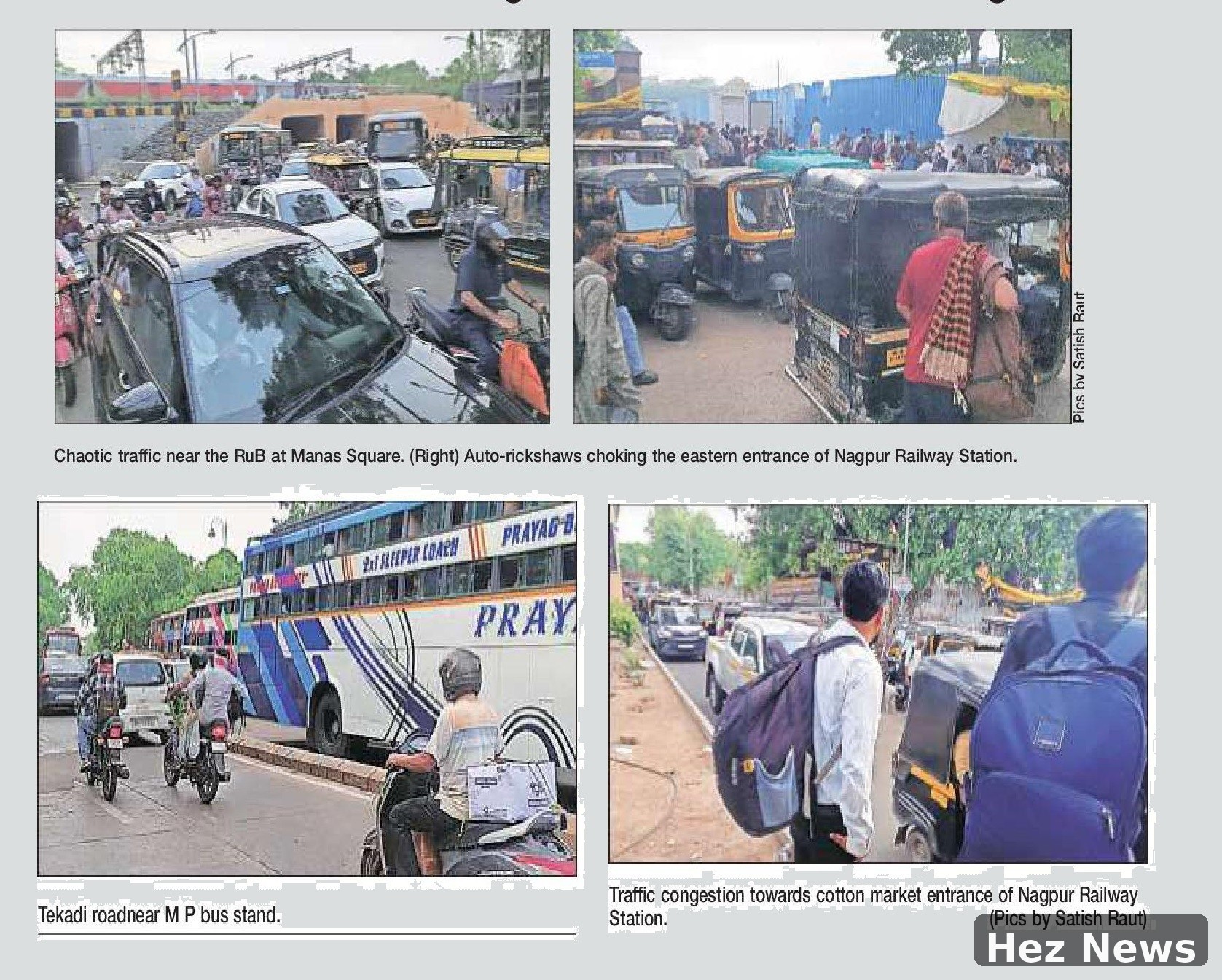
The ambitious plans for a world-class railway station in Nagpur face significant challenges due to persistent traffic issues. As urban transport infrastructures evolve, the importance of efficient access to transport hubs has never been more critical.
Imagine a commuter in Nigeria, much like a passenger in Nagpur, who leaves home with ample time to catch a train. The expectation is that the primary concern will be to locate the correct platform. However, unforeseen traffic jams can transform this journey into a stressful ordeal. This scenario is not unique to Nagpur; major cities across Nigeria, such as Lagos and Abuja, often grapple with similar transport dilemmas.
The Impact of Traffic Congestion
In many urban centers, including those in Nigeria, traffic congestion is a daily reality. Commuters frequently find themselves ensnared in gridlock, leading to delays that can jeopardize their travel plans. For the railway station in Nagpur, the influx of passengers is expected to increase with the station’s upgrades, which only exacerbates the traffic situation.
According to local transport authorities, the current road infrastructure is insufficient to support the growing number of vehicles. This situation is reminiscent of the challenges faced by Nigeria’s transport sector, where rapid urbanization has outpaced infrastructure development.
Proposed Solutions and Future Outlook
To combat these traffic issues, city planners and transport officials are exploring various solutions. These include improving public transport systems, implementing better traffic management, and enhancing road infrastructure to accommodate the growing population.
In the context of Nigeria, similar strategies could benefit urban areas. Investments in rail and bus rapid transit systems could alleviate congestion, making it easier for citizens to access transport hubs and improving overall urban mobility.
As Nagpur strives to realize its vision of a world-class railway station, it serves as a reminder for Nigerian cities to prioritize infrastructure that meets the needs of their populations. By learning from each other’s experiences, cities can work towards creating more efficient and accessible transport systems.
Conclusion
The dream of a world-class railway station in Nagpur is threatened by traffic woes, echoing the challenges faced by cities worldwide, including in Nigeria. It highlights the urgent need for comprehensive urban planning that prioritizes both infrastructure development and efficient traffic management to enhance the commuter experience.



Leave a Comment