

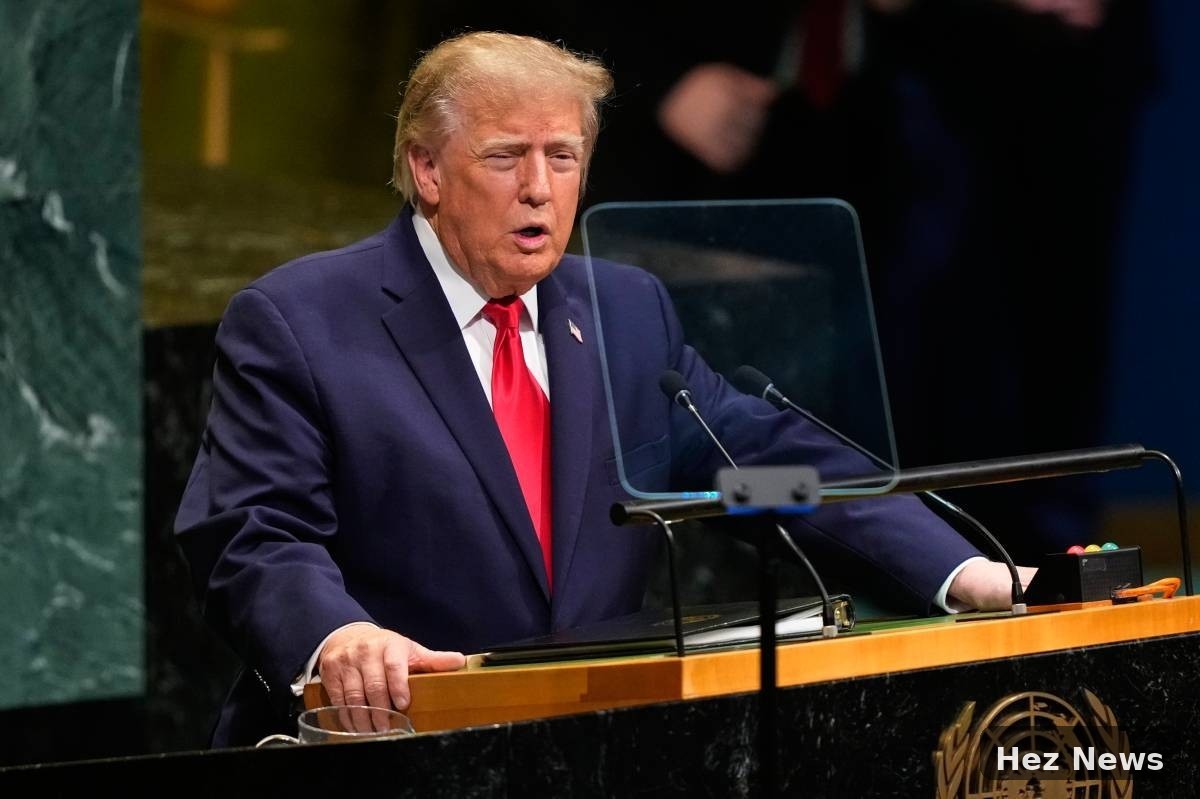
UNITED NATIONS — During a recent address at the United Nations, President Donald Trump outlined a contentious vision for the United States, emphasizing a militaristic approach that appears to dismiss international norms. This stance sharply contrasts with the growing calls from various global leaders for enhanced cooperation and diplomatic restraint.
In his speech, Trump reiterated the "America First" policy, portraying the US as a nation ready to act independently of international agreements. This position raises concerns among allies who advocate for a multilateral approach to global challenges, including climate change and international security.
US Policy Under Scrutiny
As Nigeria continues to navigate its own complex international relationships, Trump's rhetoric at the UN has resonated within the context of Nigeria's foreign policy objectives. Many Nigerian leaders are wary of the implications of a more aggressive US stance on global governance, particularly in areas concerning economic partnerships and security.
Trump's insistence that the US will prioritize its national interests over international commitments poses potential challenges for nations like Nigeria, which rely on strong ties with the US for trade and security assistance. The Nigerian government has historically valued its relationship with the US, particularly in the fight against terrorism and for economic development.
The Global Reaction
Reactions to Trump's speech were mixed, with some leaders expressing concern over the potential erosion of international cooperation. Countries that have traditionally aligned with the US are now treading carefully, reassessing their strategies in light of America's unilateral approach.
In Nigeria, analysts are closely monitoring these developments. The implications of Trump's policies could affect Nigeria's economic strategies and its ability to engage with international partners effectively.
Looking Ahead
As the global landscape shifts, the need for Nigeria to adapt its diplomatic strategies becomes increasingly urgent. The Nigerian government may need to seek stronger alliances with other nations and regional bodies to counterbalance the potential isolationism suggested by Trump's administration.
As discussions continue at the UN, the emphasis on cooperation versus unilateral action will be pivotal for the future of international relations. Nigerian leaders will need to engage in ongoing dialogue with both American counterparts and other global leaders to ensure that the interests of Nigeria are adequately represented on the world stage.
In conclusion, while Trump's vision for a militaristic and self-assertive US may resonate with some, for countries like Nigeria, it introduces a layer of uncertainty that could reshape international relations and economic partnerships in the years to come.



Leave a Comment