

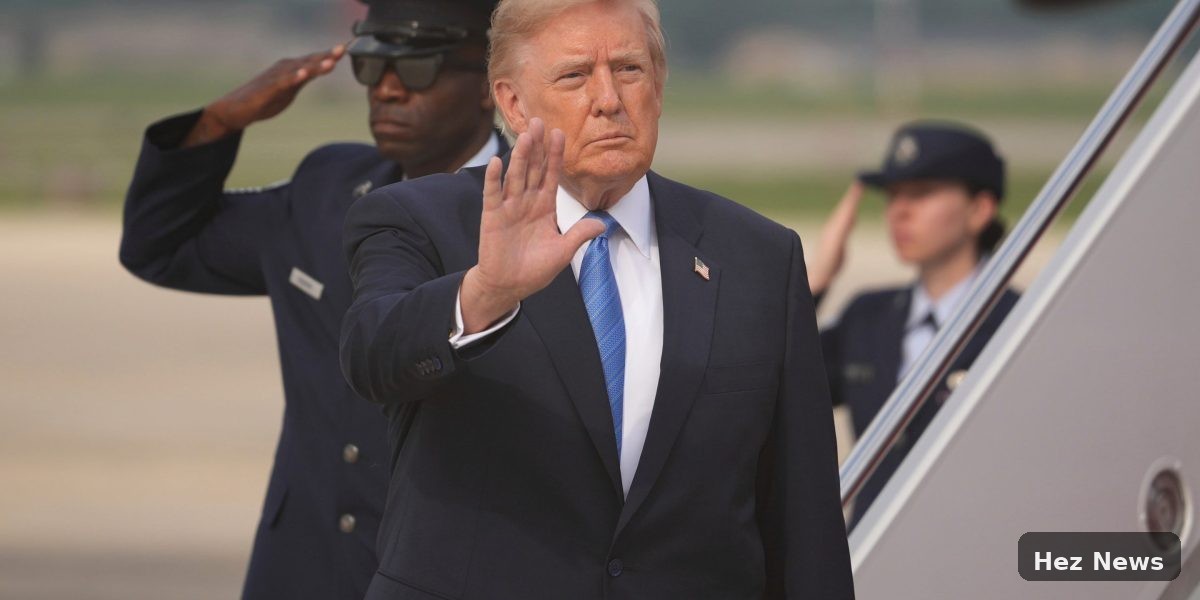
In a significant announcement, former President Donald Trump declared that the United States has struck an agreement to take control of approximately 65 billion barrels of oil reserves in Venezuela. This agreement, as per Trump, was facilitated by key figures in his administration, including Secretary of State Marco Rubio and Defense Secretary Pete Hegseth, alongside Venezuela's interim President, Delcy Rodriguez.
Background on Venezuelan Oil Reserves
Venezuela is home to some of the largest oil reserves in the world, a resource that has been underutilized due to ongoing political and economic turmoil. For years, the country's oil industry has faced numerous challenges, including sanctions imposed by the U.S. and other nations, which have severely impacted its production capabilities.
The Implications of U.S. Control
The announcement has raised eyebrows globally, particularly within the context of U.S.-Venezuela relations. By taking control of such vast resources, the U.S. aims to stabilize oil markets and potentially alleviate rising fuel prices that have affected countries worldwide, including Nigeria.
Nigeria, as one of Africa's leading oil producers, could see both challenges and opportunities arising from this development. With the U.S. gaining a stronger foothold in the global oil market, Nigerian oil exports may experience fluctuations depending on how this agreement influences global supply and demand.
Reactions to the Announcement
The announcement is expected to provoke mixed reactions. While some analysts believe it could be a positive move for U.S. energy independence, critics argue that it undermines Venezuela's sovereignty and could lead to further instability in the region.
Moreover, the geopolitical ramifications could extend beyond the Americas. With Nigeria's economy heavily reliant on oil exports, any shifts in global oil prices could have significant repercussions for the nation's economy and its ongoing efforts to diversify.
Conclusion
As this story develops, the focus will be on how the U.S. implements its control over Venezuelan oil reserves and what this means for global oil markets. For Nigeria, this could be a critical moment to reassess its own strategies in the face of changing dynamics in the oil industry.




Leave a Comment