

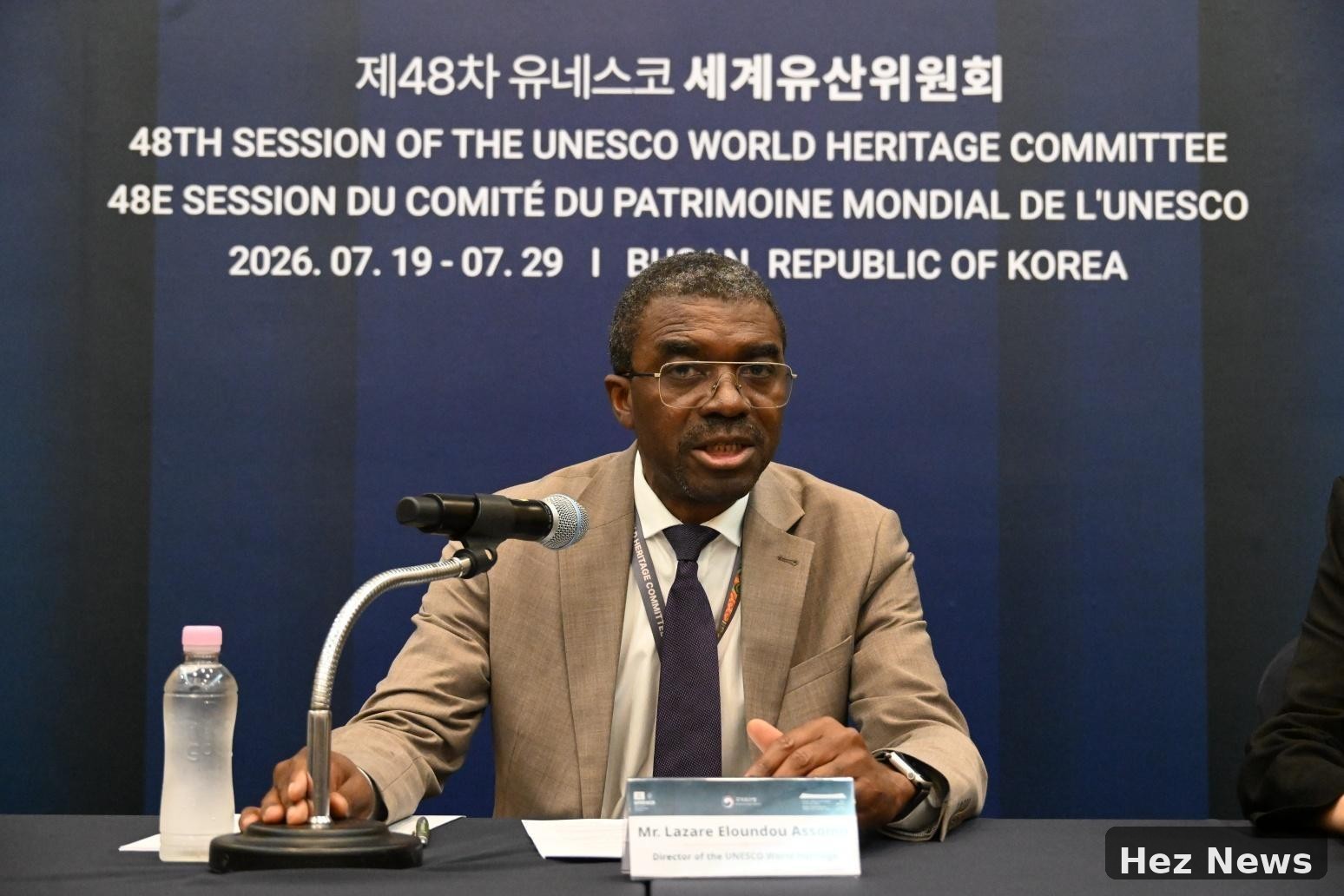
BIOGRAPHY — In a significant step for Asian heritage diplomacy, the UNESCO World Heritage Committee has convened in Busan, South Korea, for its 48th session. This landmark event is notable as it marks the first occasion that Korea has hosted this prestigious international gathering.
Lazare Eloundou Assomo, the Director of the UNESCO World Heritage Centre, expressed admiration for Korea’s commitment to preserving cultural heritage. He highlighted the country's efforts to promote global understanding and cooperation through heritage diplomacy.
Korea's Commitment to Heritage Preservation
The event underscores Korea’s growing influence in the realm of cultural heritage, which resonates deeply in Nigeria as the country continues to seek recognition for its rich cultural history. The meeting in Busan serves as a reminder of the importance of cultural heritage in addressing contemporary global challenges.
Global Leadership in Heritage
Assomo noted that Korea’s leadership in this domain sets an example for other nations. He stated, “The way Korea has embraced its heritage speaks volumes about its dedication to fostering international dialogue and collaboration.” This sentiment is particularly relevant for Nigeria, which boasts a vast array of cultural sites and traditions that are yet to be fully recognized on the global stage.
Korea’s hosting of the UNESCO meeting also provides an opportunity for Nigeria to reflect on its own cultural assets. As the Nigerian government continues to push for the designation of sites such as the Aso Rock and Olumo Rock as UNESCO World Heritage Sites, the insights gained from this event could be invaluable.
Implications for Nigeria
The Nigerian cultural landscape is rich and diverse, with numerous ethnic groups contributing to a tapestry of traditions and heritage. Engaging with the international community through platforms like UNESCO could enhance Nigeria's cultural diplomacy and increase global awareness of its heritage.
Moreover, as African nations strive for greater visibility in global heritage discussions, Korea’s leadership offers a model of how to effectively engage with international heritage bodies. The success of this session in Busan could inspire Nigerian policymakers and cultural advocates to pursue similar paths.
Conclusion
As the world grapples with issues such as climate change and globalization, the preservation of cultural heritage remains a vital concern. The events in Busan remind us of the need for countries, including Nigeria, to actively participate in these discussions and advocate for the recognition of their cultural heritage on the global stage.





Leave a Comment