

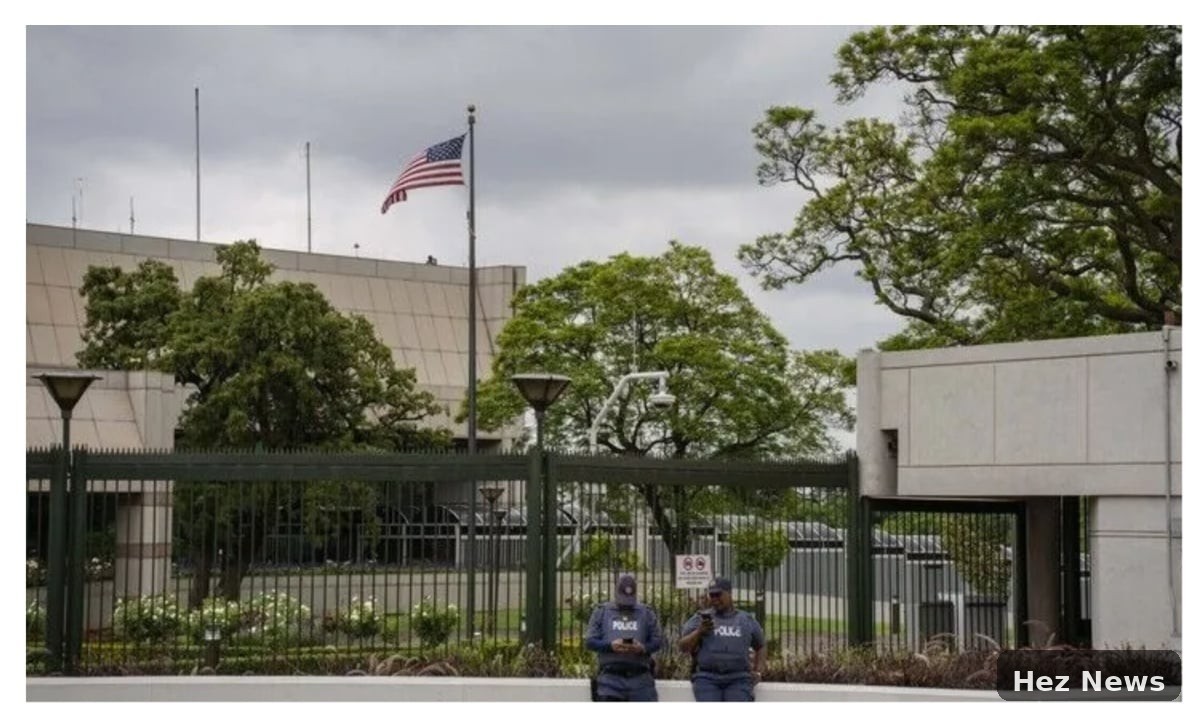
The United States has introduced a new visa restriction policy aimed at specific nationals from South Africa, citing concerns over racially motivated crime and discrimination. This decision has raised eyebrows not only in South Africa but also among countries like Nigeria, which often engage in diplomatic discussions about security and human rights.
Context of the Visa Ban
This visa ban is part of a broader effort by the United States to address issues of racial violence and discrimination within its foreign policy framework. The announcement comes at a time when the U.S. is under scrutiny for how it manages diplomatic relations with countries exhibiting human rights violations.
Impact on South Africa and Nigeria
The implications of this decision are significant. For South Africa, a country already grappling with issues of crime and inequality, the visa restrictions could complicate economic ties with the U.S. For Nigeria, which shares a complex relationship with South Africa, there are concerns about the potential spillover effects. With many Nigerians living and working in South Africa, the visa restrictions could impact the community's ability to travel to the U.S. for business or education.
International Reactions
The visa restrictions have drawn mixed reactions. Some human rights advocates support the move as a necessary step towards accountability. In contrast, critics argue that it unfairly punishes individuals who are not involved in criminal activity. Nigerian officials and citizens alike are watching the situation closely, as any further deterioration in relations between the U.S. and South Africa could have repercussions for regional stability.
Nigeria's Position on Human Rights
Nigeria has its own challenges regarding human rights and crime, particularly in the context of ethnic tensions and security issues in the Northern regions. As a member of the African Union and the United Nations, Nigeria has been active in advocating for human rights across the continent. This recent U.S. policy may prompt Nigerian leaders to reconsider their approach to human rights advocacy and international diplomacy.
Conclusion
As the U.S. implements this visa restriction policy, the international community will be closely monitoring its effects on South Africa and neighboring countries like Nigeria. While the focus is on curbing racially motivated crime, the broader implications for diplomatic relations and human rights practices in Africa remain to be seen.






Leave a Comment