

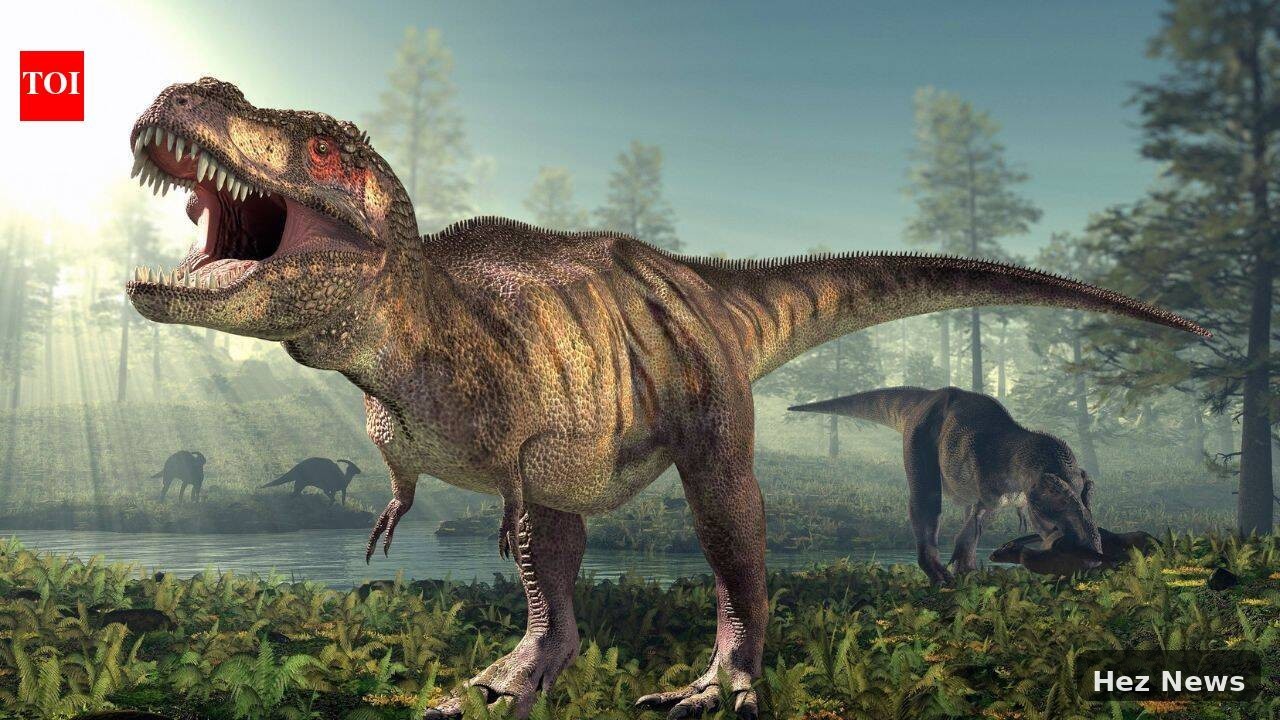
For many years, the Tyrannosaurus rex, famously known as T. rex, has fascinated both scientists and the public alike. This apex predator, which roamed North America approximately 66.5 million years ago, has been primarily understood through its bones, teeth, and isolated fossil footprints. Recent discoveries have shed new light on this iconic dinosaur, particularly about its movement.
New Insights from Fossil Footprints
Paleontologists have long debated the speed and agility of the T. rex. Traditionally, the narrative painted this massive creature as a fast runner, capable of chasing down prey. However, new fossil evidence suggests otherwise. The footprints discovered indicate that the T. rex predominantly walked rather than ran, challenging previous assumptions about its hunting behavior.
Understanding T. rex Behavior
The fossil footprints, which were meticulously studied, reveal a wealth of information about how this dinosaur might have moved across its environment. By examining the depth and spacing of the prints, researchers concluded that T. rex likely walked at a steady pace, utilizing its large mass and strength rather than speed.
This newfound understanding of T. rex movement can significantly alter our perception of its hunting strategies. Instead of being a swift predator, it appears that the T. rex relied on ambush tactics, using its powerful build to overpower prey rather than chasing them down.
Implications for Paleontology
The implications of these findings extend beyond just T. rex. They challenge the assumptions regarding other large dinosaurs and their locomotion patterns. As more fossil evidence comes to light, paleontologists are encouraged to revisit how they interpret dinosaur behavior and ecology.
In Nigeria, the study of paleontology is gaining traction, with local scientists eager to explore the rich fossil records within the country. Although we may not have T. rex fossils here, understanding the behavior of such creatures can inspire further research into Nigeria's own prehistoric life.
A Broader Perspective
This revelation is not just a scientific milestone; it serves to connect us with our planet's history and the evolution of life. As we delve deeper into the past, we learn more about the dynamics of ecosystems and how species adapted to their environments.
For Nigerian audiences, these findings highlight the importance of supporting scientific research and education on paleontology. By fostering interest in this field, we can uncover more about our own biodiversity and the ancient life forms that once thrived in the region.
The Future of Paleontological Research
As research continues, the narrative surrounding T. rex and other dinosaurs will undoubtedly evolve. The integration of technology in fossil analysis, including 3D imaging and biomechanical modeling, promises to unveil even more secrets from the past.
In conclusion, the discovery that T. rex walked rather than ran is a reminder of how much we still have to learn about these magnificent creatures. It encourages both local and international scientists to pursue paleontological studies, fostering a greater understanding of our planet's ancient history.




Leave a Comment