

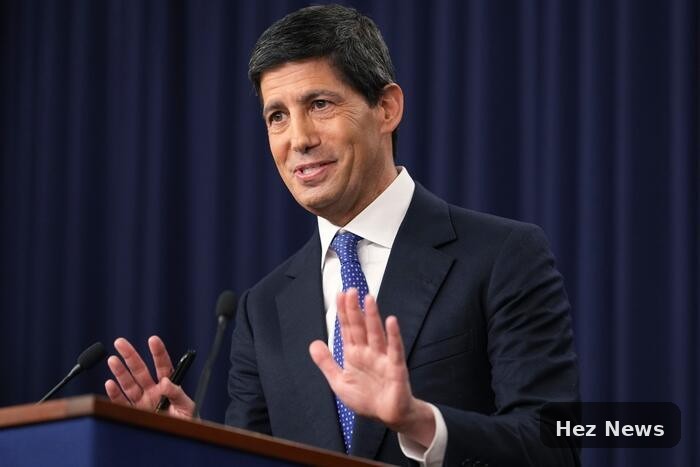
WASHINGTON – The recent decision by the Federal Reserve to increase its benchmark interest rate has stirred discussions on its implications for global economies, including Nigeria. Economists suggest that while President Donald Trump has been vocal in his criticism of the Federal Reserve, the impact of such rate hikes is often overshadowed by broader economic trends.
Understanding the Rate Hike
The Federal Reserve's rate hike, announced on Wednesday, is seen as a response to persistent inflation and indications of faster economic growth in the United States. This decision can lead to higher borrowing costs, which in turn affects global markets.
Global Repercussions
For Nigeria, a country heavily reliant on foreign investment and trade, changes in U.S. monetary policy can have significant repercussions. As the Fed raises interest rates, capital may flow out of emerging markets, including Nigeria, as investors seek better returns in U.S. assets. This could lead to a depreciation of the Naira and increased inflationary pressures domestically.
Nigeria's Economic Landscape
Nigeria's economy, which has been recovering from the impacts of the COVID-19 pandemic, may face challenges as the Fed's actions ripple through global financial systems. Analysts warn that if the Naira weakens, it could drive up the cost of imports, further exacerbating inflation, which has already been a concern for the Nigerian populace.
Broader Economic Trends
While the Fed's rate hike is a significant event, economists emphasize that broader economic trends play a more critical role in determining long-term borrowing costs. Factors such as domestic inflation rates, government fiscal policies, and global commodity prices will ultimately influence Nigeria's economic trajectory.
Looking Ahead
Nigerian policymakers and economists will need to monitor the situation closely. With the potential for rising interest rates in the U.S., it may be necessary for Nigeria to consider its own monetary policy adjustments to mitigate adverse effects on the economy. The government may need to implement measures to attract and retain foreign investment while ensuring that local businesses are supported amidst these changes.
In conclusion, while the Federal Reserve's recent rate hike is crucial, its consequences will depend largely on how it interacts with existing economic conditions in Nigeria and other emerging markets. Stakeholders in Nigeria must remain vigilant and adaptable in navigating these evolving economic landscapes.




Leave a Comment