

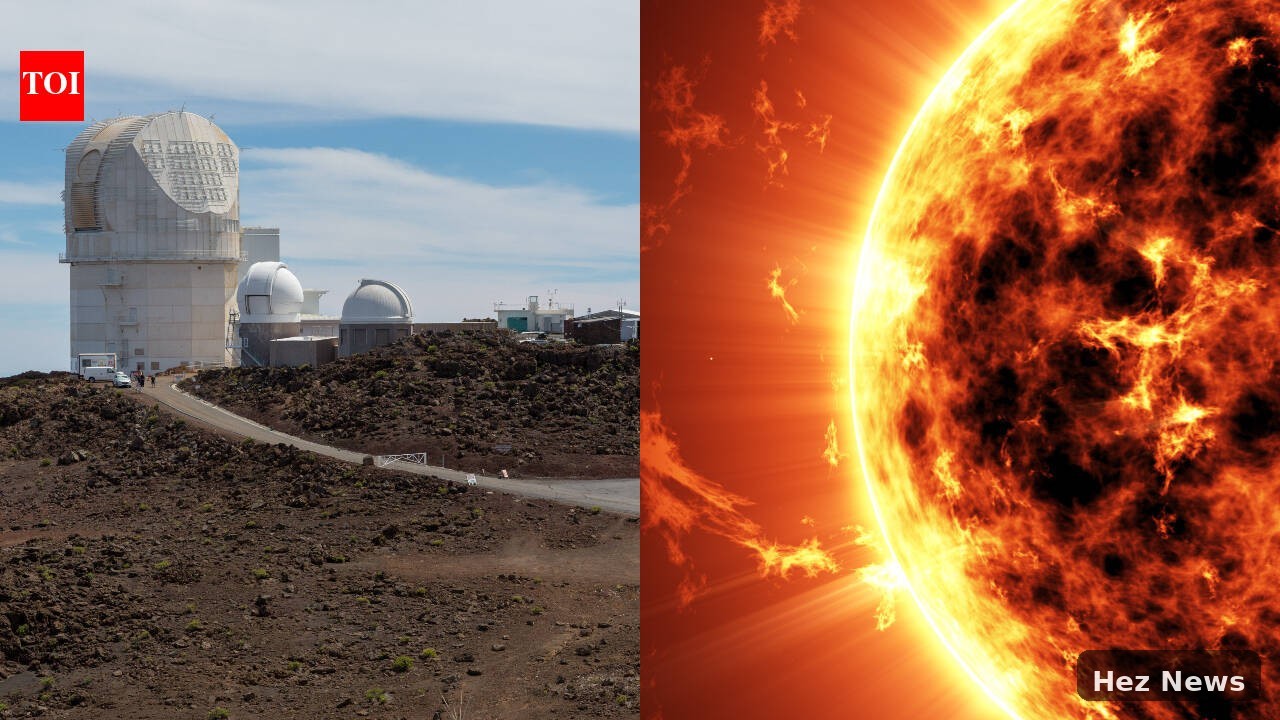
The Daniel K. Inouye Solar Telescope (DKIST), operated by the US National Science Foundation, has made groundbreaking observations of the Sun, achieving a remarkable resolution of approximately 19 kilometers. This unprecedented capability has unveiled intricate patterns of plasma vortices on the solar surface, which could significantly enhance our understanding of how magnetic energy is transported in the Sun's atmosphere.
Understanding the Sun's Complex Dynamics
The Sun, often seen as a radiant sphere of energy from our vantage point on Earth, is far more complex than it appears. The new findings from DKIST suggest that the Sun's surface is alive with dynamic activity, including these ubiquitous plasma vortices that may play a crucial role in the Sun's magnetic processes.
Implications for Solar Research
This research is particularly significant for scientists studying solar phenomena. Understanding the mechanisms behind magnetic energy transfer on the Sun can have broad implications, not just for solar physics but also for space weather prediction. This is essential as solar activity can impact satellite communications and power grids here on Earth, including in Nigeria, where reliance on technology continues to grow.
Technological Advancements in Astronomy
The DKIST, with its 4-meter diameter primary mirror, is the most powerful solar telescope ever built. It has been designed to observe solar dynamics in unprecedented detail, allowing researchers to study solar features such as sunspots, solar flares, and the intricate magnetic networks that populate the Sun's atmosphere.
Connecting Global Research to Local Context
For Nigeria, which is increasingly focusing on harnessing renewable energy sources, these insights into solar dynamics could not only enhance our understanding of solar energy but also inform future energy policies. As the country seeks to improve its energy infrastructure and accessibility, knowledge derived from international solar research could pave the way for more effective solar energy solutions.
Conclusion
The discoveries made by the DKIST mark a significant advancement in solar science and offer a glimpse into the complex mechanisms that govern our closest star. As we deepen our understanding of the Sun, the potential benefits could extend well beyond scientific inquiry to practical applications that impact daily lives, particularly in nations like Nigeria that are looking to expand their renewable energy capabilities.






Leave a Comment