

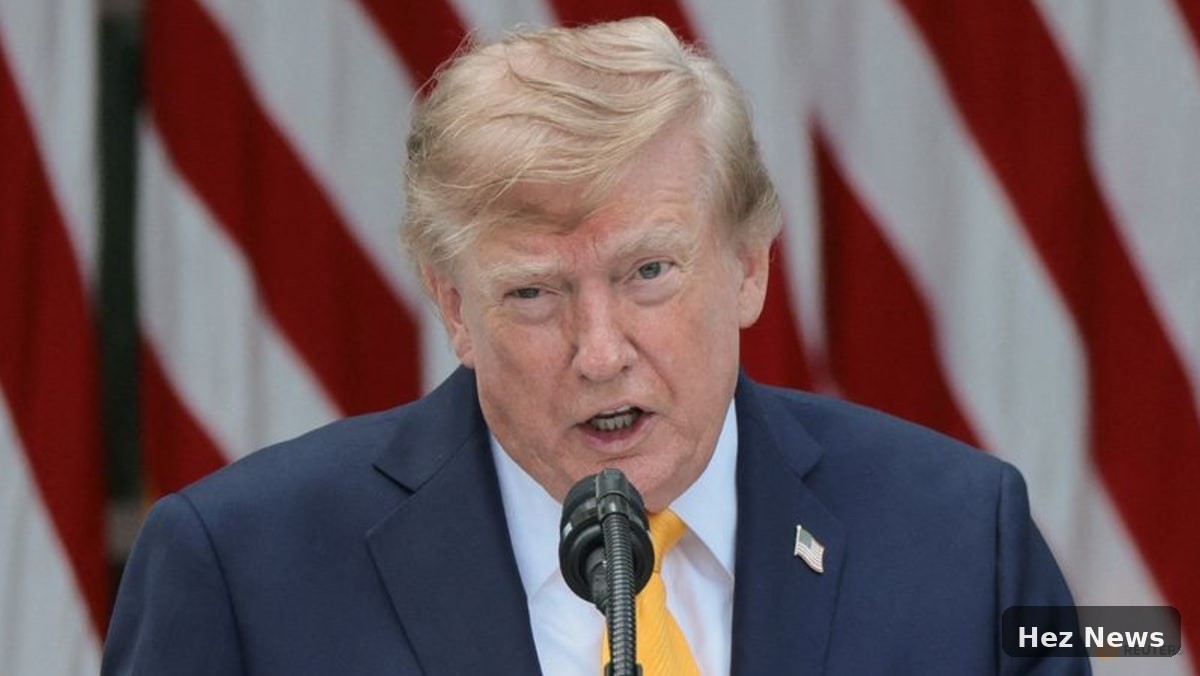
Washington, D.C. - Former U.S. President Donald Trump has expressed strong dissatisfaction with the Federal Reserve's recent decision to raise interest rates. This criticism, although indirect, marks a significant moment in Trump's ongoing relationship with the central bank he once appointed the head of.
On September 16, Trump took to social media to voice his concerns, arguing that interest rates should be set at a much lower level - ideally 1% or less. His remarks come in response to the Fed's decision influenced by Governor Kevin Warsh, who has publicly supported tightening monetary policy.
Understanding the Implications of Interest Rate Changes
The Federal Reserve's decision to raise interest rates is seen as a move to combat rising inflation, a concern shared by many around the world, including Nigeria. Higher interest rates can lead to increased borrowing costs, affecting everything from mortgages to business loans.
In Nigeria, the implications of U.S. monetary policy are significant, especially considering the interconnectedness of global economies. As the U.S. raises its rates, emerging markets like Nigeria may face capital outflows as investors seek higher returns in the U.S.
Trump's Historical Relationship with the Federal Reserve
Trump has had a tumultuous relationship with the Federal Reserve during and after his presidency. Initially, he praised Chairman Jerome Powell for maintaining low-interest rates. However, as economic conditions shifted, his stance evolved into criticism over rate hikes that he believes hinder economic growth.
In his recent statements, Trump has emphasized the need for a more accommodative monetary policy, arguing that lower rates could stimulate the economy and encourage investment, particularly in the aftermath of the COVID-19 pandemic.
The Broader Economic Landscape
The criticism directed at the Federal Reserve highlights broader economic challenges faced by many nations, including Nigeria, where inflation rates have also been a concern. The Nigerian economy has been grappling with rising prices of goods and services, prompting discussions on how monetary policy can effectively address these issues.
As global economic policies shift, it is crucial for Nigerian policymakers to monitor developments in major economies like the U.S. to understand potential impacts on local markets and inflation rates.
Conclusion
Trump's comments on the Federal Reserve reflect a broader debate about interest rates and their impact on economic growth. As countries navigate their economic recovery from the pandemic, the interplay between monetary policy in the U.S. and emerging markets like Nigeria will remain a critical area of focus.






Leave a Comment