

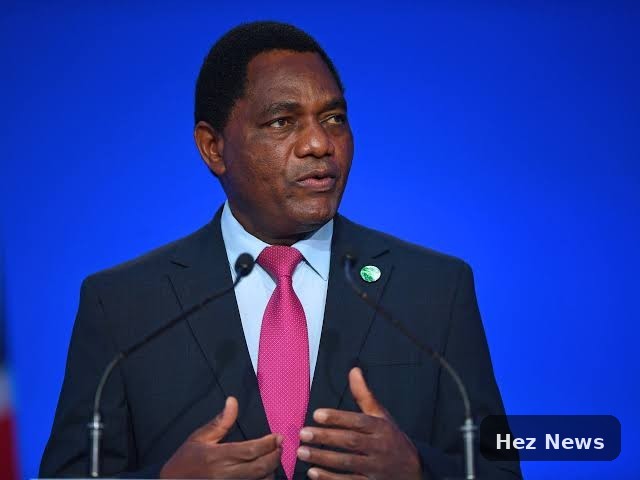
The recent bond auction in Zambia has experienced a remarkable turnaround, shifting from being undersubscribed to an impressive 37% oversubscription. This notable change comes shortly after the election of President Hakainde Hichilema, who has been at the forefront of economic reforms aimed at stabilizing the nation’s finances.
Context of the Auction
This auction marks Zambia's first local currency bond sale since Hichilema assumed office. The previous government had faced significant challenges, leading to high borrowing costs and dwindling investor confidence. However, Hichilema’s administration has promised to enhance transparency and fiscal responsibility, which has sparked renewed interest from investors.
Impact on Borrowing Costs
The bond auction's success is reflected in the sharp decline in borrowing costs for the Zambian government. Investors are more willing to purchase bonds as they anticipate positive economic reforms. This trend is particularly noteworthy for Nigeria, which has faced its own financial challenges and can draw lessons from Zambia’s recent experiences.
Reactions from the Market
Market analysts have praised the auction's outcome, suggesting it indicates a growing confidence in Zambia’s economic recovery. The oversubscription suggests that investors are optimistic about the government's ability to implement effective economic policies. This optimism could encourage similar initiatives in Nigeria as the government navigates its fiscal landscape.
Broader Economic Implications
The success of Zambia’s bond auction may have broader implications for the region. Investors are looking for stable markets, and Zambia’s experience could serve as a blueprint for neighboring nations, including Nigeria, as they seek to attract foreign investment and stabilize their economies.
Conclusion
As Zambia marks this significant milestone in its financial history, the Nigerian government and policymakers should take note of the factors that led to this success. By fostering a climate of trust and transparency, Nigeria can also work towards improving its financial situation and attracting much-needed investment.



Leave a Comment