

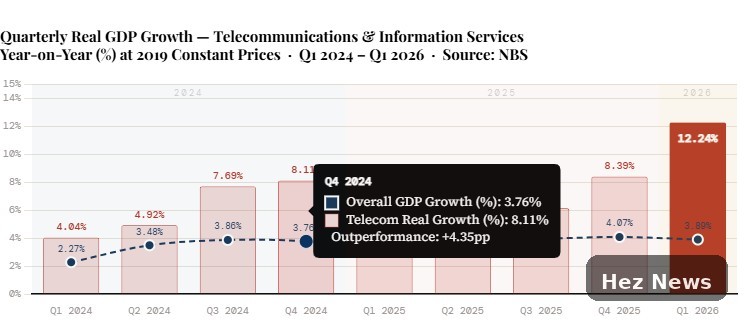
Nigeria's telecom industry has recorded its strongest growth in the first quarter of 2026, driven by the rapid expansion of the data economy. This trend reflects not only the resilience of the sector but also Nigeria's increasing reliance on digital services.
Expansion of the Data Economy
The data economy in Nigeria has been evolving rapidly, influenced by a surge in mobile internet usage and the rise of digital platforms. With a population exceeding 200 million, Nigeria presents a vast market for telecom services, particularly in urban centers where connectivity is paramount.
Factors Contributing to Growth
Several factors have contributed to this remarkable growth in the telecom sector:
- Increased Smartphone Penetration: The affordability of smartphones has led to a significant rise in internet access, enabling more Nigerians to utilize online services.
- Investment in Infrastructure: Major telecom players have invested heavily in improving network infrastructure, enhancing service delivery across the country.
- Government Initiatives: Policies aimed at boosting digital inclusion have fostered an environment conducive to growth within the sector.
Impact on the Economy
The growth of the telecom sector has substantial implications for Nigeria's economy. It not only creates jobs but also stimulates other sectors, such as e-commerce, fintech, and digital education. As more people gain access to the internet, the potential for innovation and entrepreneurship expands.
Challenges Ahead
Despite the promising growth, the sector faces challenges that need addressing:
- Regulatory Hurdles: Telecom operators often navigate complex regulations that can hinder their ability to operate efficiently.
- Infrastructure Gaps: While investments have improved services, many rural areas still lack adequate connectivity.
- Cybersecurity Threats: As digital services expand, so does the risk of cyber threats, necessitating robust security measures.
Looking Forward
As Nigeria's telecom sector continues to grow, stakeholders must work collaboratively to overcome existing challenges and leverage the opportunities presented by the expanding data economy. With the right strategies, Nigeria can position itself as a leading player in the African telecom landscape.
In conclusion, the telecom industry's strength in the first quarter of 2026 showcases the immense potential of Nigeria's digital landscape. As the country embraces technology, the future looks promising for both the telecom sector and the broader economy.





Leave a Comment