

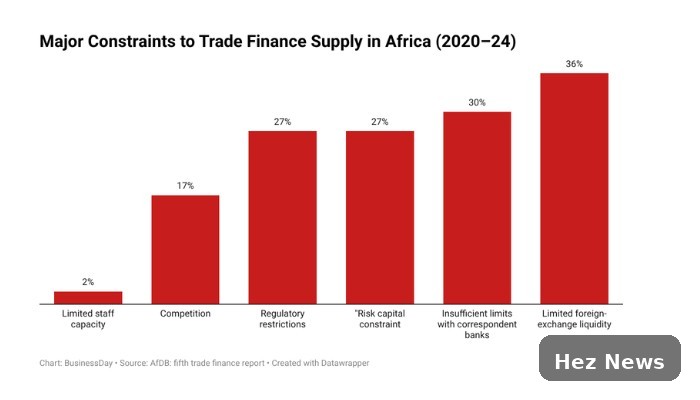
The African Development Bank (AfDB) has issued a stark warning regarding the trade finance landscape in Africa, highlighting that the continent's financing gap could escalate to a concerning $86.6 billion by 2027. This projection comes at a time when geopolitical tensions in the Middle East are posing further challenges to trade dynamics.
Understanding the Trade Finance Gap
Trade finance is essential for businesses as it enables them to conduct international trade securely and efficiently. The AfDB's report underscores how the existing gap has already hindered many African nations, including Nigeria, from fully capitalizing on trade opportunities.
Impact of Middle East Tensions
The lingering tensions in the Middle East are expected to exacerbate the already critical situation. As global markets react to instability, Nigeria—as one of Africa's largest economies—may face increased costs and reduced access to financing. This scenario could lead to a decline in trade volumes, adversely impacting economic growth.
Implications for Nigerian Businesses
For Nigerian entrepreneurs and businesses, the widening trade finance gap signifies a pressing need for innovative financing solutions. As they strive to compete in a global marketplace, the lack of adequate funding can limit their ability to expand operations, invest in technology, and explore new markets.
Moreover, this situation can have a ripple effect on employment and overall economic stability in Nigeria. The AfDB's insights serve as a call to action for both the public and private sectors to collaborate in addressing these challenges.
Strategies to Close the Gap
To mitigate the impending financial shortfall, experts recommend several strategies:
- Enhancing Financial Literacy: Businesses must be educated on available financing options, including trade credit and export financing.
- Public-Private Partnerships: Collaborative efforts can lead to innovative financing models that better serve African businesses.
- Leveraging Technology: Digital platforms can facilitate access to trade finance, making it easier for SMEs to connect with potential financiers.
By implementing these strategies, Nigeria can better position itself to navigate the challenges posed by a growing trade finance gap.
Conclusion
The AfDB's warning regarding the potential widening of Africa’s trade finance gap serves as a crucial reminder for Nigerian stakeholders to prioritize solutions that enhance trade financing. As geopolitical tensions continue to evolve, proactive measures will be key in ensuring that Nigerian businesses remain competitive on the global stage.





Leave a Comment