

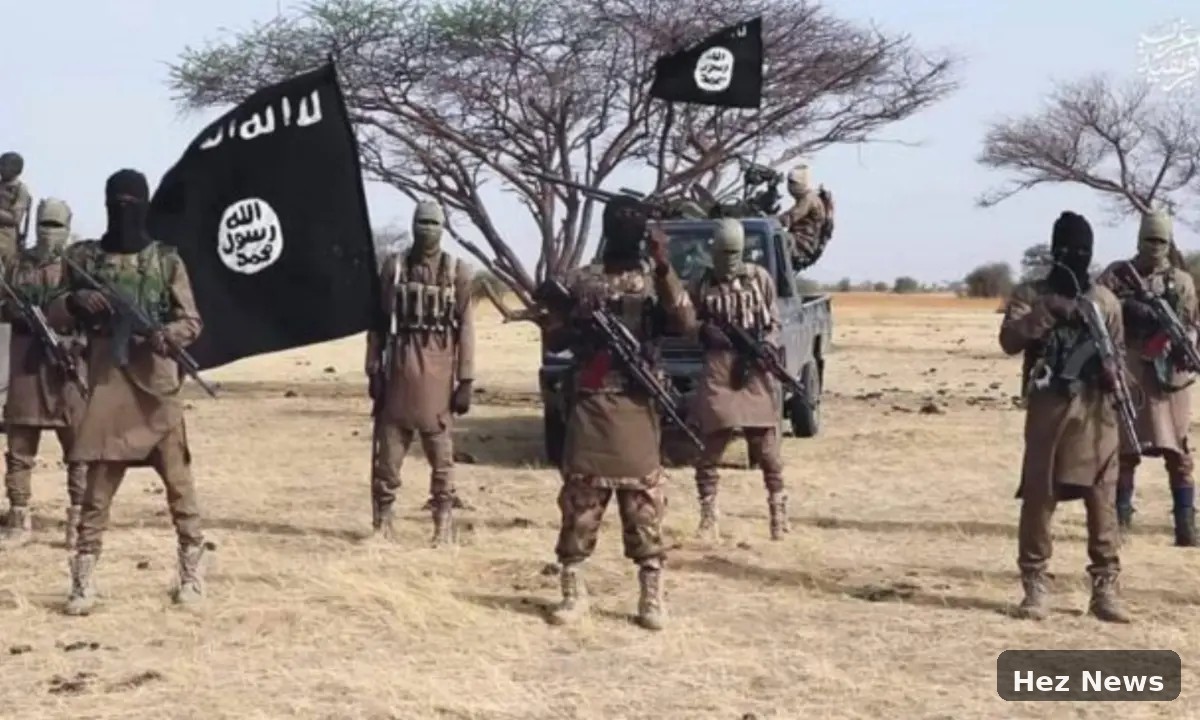
In a surprising turn of events, Ba’a Shuwa, a senior commander of the Islamic State West Africa Province (ISWAP), has reportedly rejected a newly offered leadership position. This decision follows a recent military operation that resulted in the death of his predecessor, Mainok, during a joint Nigeria-U.S. airstrike.
According to intelligence sources, the strike aimed at high-ranking ISWAP members has significantly impacted the group's command structure. With the loss of Mainok, who had been a pivotal figure in the organization, the group sought to bolster its leadership by promoting Ba’a Shuwa. However, his refusal raises questions about the internal dynamics and morale within ISWAP.
Background on ISWAP and Recent Operations
ISWAP has been a dominant force in the northeastern region of Nigeria, notorious for its violent insurgency and attacks on both military and civilian targets. The group emerged as a splinter faction from Boko Haram, emphasizing its allegiance to the Islamic State. The recent airstrike reflects ongoing efforts by Nigerian and international forces to dismantle this group, which continues to pose a significant threat to regional stability.
Despite the military success in targeting ISWAP leaders, the rejection of the leadership role by Ba’a Shuwa highlights potential fractures within the group. Analysts suggest that this might indicate internal dissent or fear of leadership instability following Mainok's death.
Implications for Nigeria's Security Landscape
The implications of Ba’a Shuwa's decision could be far-reaching. It may signal a period of uncertainty for ISWAP as they grapple with leadership challenges. Furthermore, this development could also present an opportunity for Nigerian security forces to exploit potential vulnerabilities within the group.
As the situation evolves, the Nigerian military remains vigilant, conducting operations aimed at further degrading ISWAP's capabilities. The recent airstrike is part of a broader strategy to reclaim security in the northeastern states of Nigeria, where the effects of insurgency have been felt the most.
In conclusion, Ba’a Shuwa’s refusal to accept a leadership role after the death of Mainok may not only reflect internal conflicts within ISWAP but also signify a potential turning point in the ongoing battle against this insurgent group.

Leave a Comment